
Views: 0 Author: Site Editor Publish Time: 2026-07-25 Origin: Site


Procuring the wrong stainless grade often leads to disaster. You either face premature structural failure or waste valuable resources. We see this dilemma daily across multiple industries. Buyers constantly wonder which material handles extreme stress better. Let us dispel a major misconception right now. When looking purely at raw mechanical yield and tensile limits, 304 and 316 are practically identical. They offer the exact same physical resistance to breaking under static loads.
Instead, you must reframe your evaluation criteria completely. Ask yourself which alloy maintains its structural integrity under severe environmental stress. This single question aligns perfectly with actual engineering demands. In this comprehensive guide, you will learn the crucial differences between these two prominent grades. We will explore detailed chemical compositions, practical applications, and complex fabrication realities. You will walk away knowing exactly how to specify the right metal for your next project, ensuring lasting stability.
Mechanical Parity: Both 304 and 316 share nearly identical baseline yield strengths (approx. 205 MPa) and tensile strengths (approx. 515 MPa).
The Molybdenum Factor: 316 contains 2-3% molybdenum, which acts as a shield against pitting and crevice corrosion, particularly in chloride-rich environments.
Application Logic: 304 is the industry standard for baseline exposure; 316 is mandatory for marine, chemical, and high-salinity applications.
To accurately evaluate these alloys, we must first define what "strength" truly means in a metallurgical context. Engineers typically look at two primary metrics. They analyze Yield Strength and Ultimate Tensile Strength. Yield Strength marks the exact stress point where permanent plastic deformation occurs. At this critical threshold, the metal bends and cannot return to its original shape. Ultimate Tensile Strength defines the final breaking point under maximum applied stress. Interestingly, variations in processing methods impact raw strength significantly more than switching from 304 to 316. Cold rolling or drawing alters the internal grain structure. This physical manipulation boosts physical limits far beyond the base alloy specifications.
In real-world applications, materials rarely fail from a sudden raw overload. They usually succumb to slow, insidious environmental degradation. This breakdown compromises structural integrity over time. We call this phenomenon corrosion fatigue. It stands as the true threat to long-term stability. The 316 grade proves "stronger" only because it resists this specific degradation better. A bridge support bracket made of 304 might handle the mechanical weight effortlessly. However, if you install it in a coastal environment, microscopic cracks will form over time. These hidden fissures weaken the part until it snaps under a completely normal load.
We also need to understand the famous "18-8" connection. Grade 304 belongs to the broader 18-8 stainless family. It contains approximately 18% chromium and 8% nickel. We use this foundational composition as our baseline standard for comparison. It provides excellent overall durability for most standard atmospheric environments. The 18-8 standard serves as the default choice across numerous industries because it balances workability with highly reliable resistance.
To highlight this mechanical parity, review the typical baseline metrics below:
Mechanical Property | Grade 304 (Annealed) | Grade 316 (Annealed) |
|---|---|---|
Yield Strength (0.2% Offset) | ~205 MPa | ~205 MPa |
Ultimate Tensile Strength | ~515 MPa | ~515 MPa |
Elongation at Break | 40% | 40% |
Hardness (Rockwell B) | 88-92 | 88-95 |
Let us examine the exact chemical makeup of these two metals. Grade 304 relies heavily on a precise chromium-nickel balance. The high chromium content reacts with atmospheric oxygen instantly. It forms a passive, microscopic oxide layer on the surface. This invisible layer self-heals when scratched. It handles general atmospheric exposure and fresh water environments without issue. You will find it successfully deployed across countless everyday applications.
Grade 316 changes this formula slightly but crucially. It incorporates an additional 2-3% molybdenum into the mix. The alloy also features a slightly higher nickel content, pushing closer to 10-14%. This molybdenum addition acts as a powerful, targeted shield. It actively repels chloride ions found in salt water and industrial chemicals. Without molybdenum, chloride ions attack the passive chromium oxide layer aggressively. They break it down faster than it can reform, creating microscopic surface pits.
To objectively measure this resistance, engineers calculate the Pit-Resistance Equivalent Number (PREN). This standard metric quantifies exactly why 316 outperforms 304 in corrosive settings. It removes marketing fluff and provides hard metallurgical data. The formula typically follows this structure: PREN = %Cr + 3.3(%Mo) + 16(%N). A higher PREN indicates superior resistance to localized pitting.
Let us look closely at how the elements stack up:
Chromium (Cr): Provides the base oxidation resistance. Both alloys share similar levels, though 304 often contains a fraction more.
Nickel (Ni): Stabilizes the austenitic structure and improves toughness. Grade 316 requires more nickel to maintain stability alongside the molybdenum addition.
Molybdenum (Mo): The defining element of 316. It specifically combats chloride-induced pitting and crevice corrosion under harsh conditions.
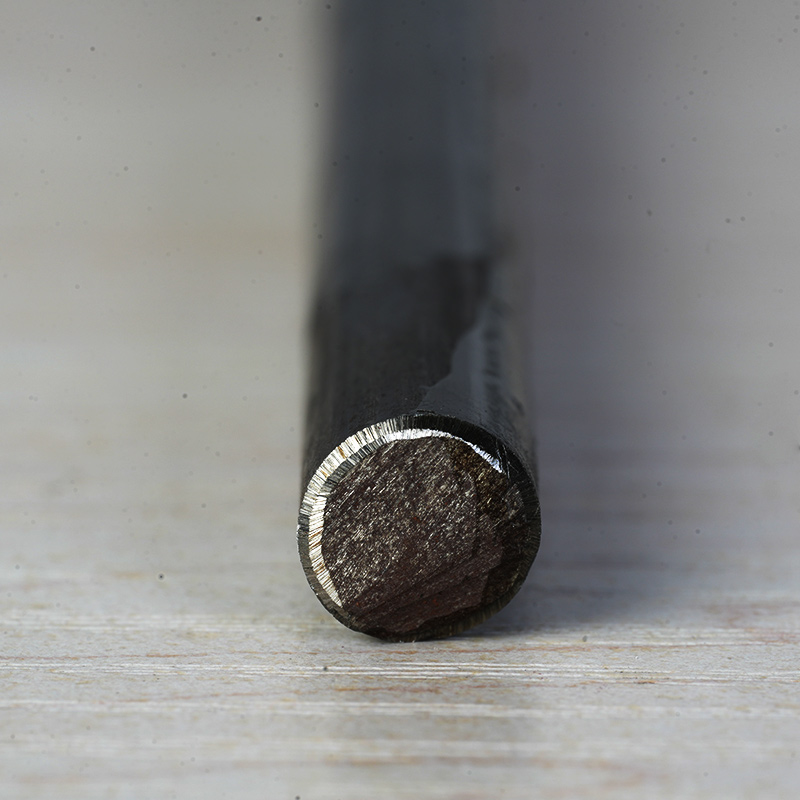
When selecting steel wire for any project, you must balance competing physical demands carefully. You need to weigh tensile load requirements against flexibility and fatigue resistance. You also must strictly define the environmental exposure limits before finalizing the material grade. The continuous, exposed surface area of drawn wire makes it highly susceptible to surface degradation.
The selection process hinges entirely on the intended operating environment. A wire rope suspending heavy dynamic loads requires pristine structural integrity at all times. Even microscopic surface pits can initiate dangerous stress fractures. These fractures propagate rapidly through the individual wire strands, leading to catastrophic failure.
Use it for standard architectural meshes, decorative grilles, and indoor industrial shelving.
Specify it for consumer appliances, kitchen racking, and baseline agricultural fencing.
Choose it when installations remain totally free from constant salt spray or industrial chlorides.
Deploy it in freshwater environments where continuous submersion does not involve high chemical concentrations.
Make it non-negotiable for marine rigging, boat railings, and offshore oil platforms.
Demand it for medical devices, surgical instruments, and chemical processing filtration meshes.
Rely on it to prevent the structural hazard of localized pitting in high-tension cables exposed to coastal winds.
Utilize it in food processing plants where aggressive cleaning agents and sanitizers wash over the equipment daily.
You must match the alloy directly to the localized hazard level. Using 304 in a marine environment guarantees rapid pitting and eventual snapping. Using 316 for basic indoor shelving wastes your project budget on unnecessary environmental resistance.
Manufacturers view these metals through a completely different lens. They care deeply about CNC processing, tooling wear, and optimal cycle times. Both grades belong to the austenitic family, meaning they remain highly prone to work hardening during fabrication. However, the slightly altered alloy matrix of 316 poses unique challenges on the factory floor. It often proves marginally tougher on standard cutting tools.
As a machinist cuts into the metal, the surface deforms and instantly hardens. To mitigate this severe work hardening, fabrication shops must adapt their techniques immediately. We strongly recommend using high-quality carbide tooling. You should apply heavy, constant feeds to get under the work-hardened layer quickly. Slow, rubbing cuts will glaze the material surface and ruin the tool entirely. Sharp cutting edges and generous coolant application remain absolutely vital for successful CNC operations.
Welding presents another critical fabrication hurdle for structural assemblies. When you weld standard grades, extreme heat causes carbon to precipitate at the grain boundaries. This phenomenon, known as sensitization, severely weakens corrosion resistance directly adjacent to the weld bead. The metal literally rusts from the inside out at the weld joint over time.
To solve this dangerous problem, manufacturers use 304L and 316L variants. The "L" denotes a highly restricted low carbon profile. These low-carbon variants manage carbon precipitation effectively during the high-heat welding cycle. They keep welded assemblies structurally sound and highly resistant to decay without requiring expensive post-weld annealing.
Evaluating project feasibility requires looking far beyond the initial material investment. You must model the upfront procurement requirements against the true functional lifespan of the component. Choosing the wrong grade triggers severe downstream consequences. You risk premature replacement, unexpected operational downtime, and lasting reputational damage. When a critical structural support fails, the cost of emergency maintenance easily dwarfs the initial savings of choosing a lesser alloy.
However, you must also recognize the real danger of over-specification. Defaulting automatically to 316 for benign environments creates massive operational inefficiency. It unnecessarily depletes procurement funds. You gain zero measurable return on investment when you deploy heavy-duty marine grades in climate-controlled indoor environments.
Engineers often struggle to find the exact line between adequate protection and wasteful resource allocation. To simplify this complex process, we utilize a strict condition-based shortlisting methodology.
Use this straightforward decision framework to streamline your shortlisting logic:
Assess for salt exposure: Does the component face coastal salt spray, marine environments, or winter de-icing salts? If yes, specify 316 immediately.
Check chemical submersion: Will the application remain submerged in highly chlorinated water or aggressive industrial solvents? If yes, you must select 316.
Evaluate sanitation protocols: Does the facility use harsh, caustic wash-down procedures daily? If yes, lean heavily toward 316.
Determine indoor baselines: Does the application involve standard indoor electrical enclosures, basic automotive trims, or standard kitchen hardware? If yes, safely default to 304.
This logical flow ensures your components survive their intended environments without squandering valuable resources on unneeded capabilities.
We have established a clear reality regarding these two prominent stainless grades. Neither alloy stands as universally "stronger" in pure mechanical terms. They share nearly identical baseline yield limits and ultimate tensile capabilities. Under perfectly clean conditions, both metals carry the exact same structural load. However, 316 offers vastly superior environmental endurance due to its unique chemical composition. The addition of molybdenum gives it an undeniable edge in demanding applications. It completely dominates in chloride-rich atmospheres and heavy marine settings.
Procurement and engineering teams must conduct thorough environmental audits. Always evaluate the specific end-use conditions before finalizing your material specifications or issuing purchase orders. Ensure you match the localized hazard level directly to the alloy's chemical profile. This rigorous approach prevents premature structural failure and eliminates catastrophic maintenance surprises. It guarantees long-lasting physical performance and maximizes the operational efficiency of your material investments.
A: No. They look completely identical to the naked eye. You cannot distinguish them by appearance alone. Proper verification requires a certified material test report (MTR). Alternatively, you can use a chemical drop test on site to verify the exact presence of molybdenum.
A: Like 304, 316 represents an austenitic stainless steel. It generally remains non-magnetic in its raw, annealed state. However, cold working processes like drawing or bending alter its microstructure. This physical stress often induces a slight, noticeable magnetic response in both alloys.
A: The "L" stands for low carbon. Grade 316L prevents carbide precipitation during high-heat welding processes. This ensures the heat-affected weld area maintains maximum corrosion resistance. While its raw tensile strength is marginally lower than standard 316, it performs identically in most structural applications.


