
Views: 0 Author: Site Editor Publish Time: 2026-08-01 Origin: Site


Preventing slippage and maintaining structural integrity in prestressed concrete remains a critical engineering challenge in high-load infrastructure. Structural engineers constantly battle massive dynamic forces threatening to compromise vital material bonds. Historically, construction projects relied heavily on smooth or standard indented wires to reinforce concrete elements. However, these traditional options often suffer from anchorage slip and fatigue degradation under severe cyclic loading. We now see a definitive industry shift toward specialized ribbed profiles specifically engineered to maximize mechanical interlocking.
This article delivers a comprehensive technical evaluation of why this modern wire profile outperforms legacy alternatives. We will explore the underlying mechanics of enhanced adhesion, review key performance metrics, and show you exactly how to vet suppliers for large-scale procurement. You will learn actionable strategies to reduce transmission length and prevent micro-cracking in your most demanding structural environments.
Enhanced Anchorage: The continuous spiral geometry exponentially increases the mechanical interlock between steel and concrete compared to smooth profiles.
Optimized Stress Distribution: Combines the bonding benefits of ribbed profiles with the high tensile capacity and ductility of Stress-Relieved Steel Wire.
Risk Mitigation: Significantly reduces transmission length and controls micro-cracking in dynamic load environments (e.g., railway sleepers, bridge girders).
Procurement Priority: Sourcing requires strict evaluation of metallurgical consistency, dimensional tolerances, and certified pull-out test data.
Smooth profile wires fundamentally limit the performance of high-stress concrete structures. They rely primarily on chemical adhesion and microscopic surface friction to transfer loads. When concrete cures, it shrinks slightly around the wire. This shrinkage creates a friction hold. Over time, however, chemical adhesion breaks down. Cyclic loading and environmental vibrations slowly degrade the frictional bond. Once the bond weakens, longitudinal slip occurs.
Poor concrete adhesion directly reduces the lifespan of critical infrastructure. Anchorage slip causes an immediate loss of prestress force. The structural element loses its designed camber and load-bearing capacity. This failure accelerates structural fatigue. Micro-cracks widen and expose internal reinforcement to moisture. Corrosion sets in rapidly, threatening the entire structural assembly. We cannot afford these risks in high-stakes infrastructure.
Modern engineering projects require strict success criteria to guarantee safety. Procurement and engineering teams must demand reliable force transfer across every batch of reinforcement materials. You need reduced transmission lengths to maximize the effective span of precast elements. Furthermore, teams must design for predictable failure modes. Sudden, brittle adhesion failure is unacceptable under extreme stress. Reinforcements must yield gradually, providing visible warnings long before catastrophic failure occurs.
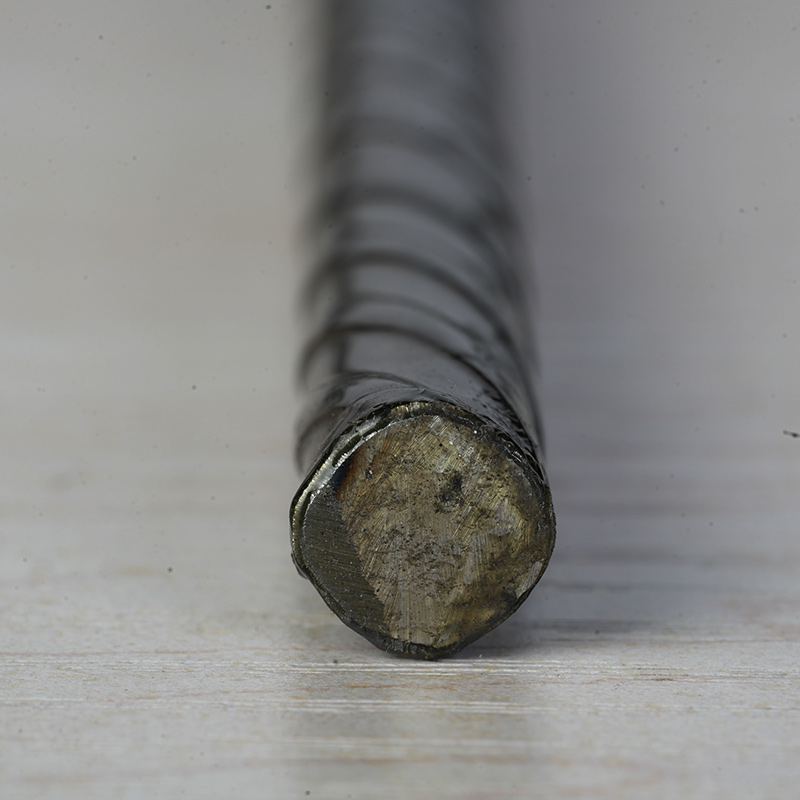
The secret to eliminating anchorage slip lies in geometric interlocking. The continuous, spiral rib profile creates a "screw-like" mechanical bond directly into the concrete matrix. As the concrete cures, it flows into the grooves of the Helical Rib Steel Wire. This locks the wire in place. The physical ridges block longitudinal movement. The surrounding concrete must physically crush before the wire can slip. This mechanism dramatically outperforms the weak friction reliance of smooth alternatives.
Geometric interlocking works best when paired with precise thermal treatments. Heating and tensioning the material eliminates residual drawing stresses. This thermal process creates Stress-Relieved Steel Wire. The stress-relieving process maintains high yield strength and exceptional ductility. Crucially, it achieves this without flattening or compromising the physical ribs. The ridges remain sharp and precisely dimensioned. You get the perfect synergy of high tensile capacity and superior mechanical bonding.
Proper load transfer efficiency depends on physics. The ribbed surface distributes stress evenly along the entire reinforcement length. Smooth wires often create localized stress concentrations near the anchor zones. These high-stress nodes cause concrete splitting. The continuous spiral design mitigates this problem. It diffuses the tensioning force into the surrounding matrix smoothly. This prevents internal bursting forces and protects the structural integrity of the concrete element over decades of service.
Performance Comparison of Wire Profiles
Profile Type | Primary Adhesion Mechanism | Relative Bond Strength | Crack Control Efficiency | Fatigue Resistance |
|---|---|---|---|---|
Smooth Wire | Chemical Adhesion & Friction | Baseline (1.0x) | Low | Poor |
Indented Wire | Discontinuous Interlock | Moderate (1.5x) | Medium | Moderate |
Helical Rib Wire | Continuous Screw Interlock | Superior (2.5x+) | High | Excellent |
Baseline empirical expectations clearly show the limitations of older profiles. Standard pull-out test performance reveals massive differences between smooth, indented, and helical geometries. Smooth wires fail quickly under tension once chemical adhesion breaks. Indented wires offer moderate improvements but suffer from inconsistent grip. Helical designs provide superior ultimate bond strength. The continuous ribbing exponentially increases structural stiffness. The wire essentially locks into the concrete, requiring massive force to induce pull-out failure.
Structural cracks will inevitably form under heavy service loads. The goal is controlling their size and spacing. Improved bonding minimizes crack width significantly. The helical ribs restrict concrete movement immediately adjacent to the wire. Instead of one large, dangerous crack, the structure develops multiple microscopic cracks. These micro-cracks distribute stress harmlessly. Tightly controlled crack widths prevent water ingress and stop internal reinforcement from corroding.
We must assess performance under dynamic and cyclic loading. Helical ribs prove far superior for components subjected to constant vibration. Indented wires often create stress risers at the indent points, leading to premature fatigue snapping. The continuous spiral of the helical profile avoids sharp indentations. It smoothly channels vibrational energy into the concrete mass. This specific geometry extends the operational lifecycle of structures facing relentless, pounding forces.
Engineers must match the right Prestressed Concrete Steel Wire to the specific environmental demands of the project. High-stress applications magnify the flaws of inferior materials. Consider the following critical infrastructure categories:
Railway Sleepers: High-speed rail creates violent dynamic impacts. Heavy trains cause immediate downward deflection followed by rapid upward rebound. This cyclic pounding demands exact mechanical interlock. Helical rib wire grips the concrete tightly, preventing the rapid degradation and pulverization commonly seen in older sleepers.
Bridge Girders and Overpasses: Large-span elements require maximum structural shear capacity. Minimizing the transmission length is critical here. The ribbed geometry transfers the prestress force into the concrete much faster than smooth wire. This allows engineers to design shorter anchor zones and thinner, more efficient bridge girders.
Heavy Industrial Infrastructure: Utility poles, nuclear containment vessels, and heavy-duty precast slabs require long-term dimensional stability. Wind loads on utility poles create constant swaying. Containment vessels face immense internal pressure. The continuous spiral rib ensures these elements maintain their shape and strength without progressive slippage over a fifty-year lifespan.
Adopting new reinforcement profiles introduces specific operational realities. You must address tensioning equipment compatibility immediately. Gripping mechanisms on tensioning jacks must accommodate ribbed profiles perfectly. Standard wedge grips designed for smooth wire might crush or shear the helical ridges. Operators must calibrate their jacks and use specialized wedges. Proper calibration prevents surface gouging during the stressing operation.
Textured surfaces present unique handling and corrosion vulnerabilities. The spiral grooves can easily trap atmospheric moisture and condensation. We recommend strict storage protocols prior to the concrete pour. Keep the spools elevated and covered in dry, climate-controlled environments. Rust on the ribs will actively destroy the precise geometric interlock you paid for. Ensure workers wear clean gloves to prevent transferring corrosive oils onto the steel.
Quality and compliance standards provide your primary defense against catastrophic failure. You must verify strict adherence to global standards. Look for ASTM A421, EN 10138-3, or your specific regional equivalents. The market occasionally sees cheap, non-standardized rib geometries. These irregular profiles routinely fail to meet expected anchorage values. They might look correct to the naked eye but lack the precise depth and pitch required for safe load transfer.
Common Mistakes in Implementation: Leaving wire exposed to rain for weeks before pouring, or failing to swap out jack wedges when transitioning from smooth to ribbed wire batches. Avoid these oversights to maintain structural integrity.
Procurement teams face significant challenges when vetting manufacturers. Securing bulk materials for massive infrastructure projects requires a disciplined evaluation framework. Use the following logic to shortlist your vendors effectively:
Batch-to-Batch Consistency: Evaluate the manufacturer’s quality control process rigorously. Rib depth and pitch tolerances cannot vary between spools. Inconsistent geometry leads to unpredictable bond strengths across a single bridge span. Demand detailed statistical process control (SPC) charts from the facility.
Testing and Traceability: Establish strict demand points for buyers. Require certified mill test certificates for every delivery. Ask for third-party pull-out test data verifying the mechanical interlock. Furthermore, request comprehensive metallurgical composition reports to ensure raw material purity.
Production Capacity and Lead Times: Assess the vendor's true ability to supply large-scale infrastructure projects. Some suppliers rush the manufacturing process to meet high demand. They might compromise the critical stress-relieving process. Verify their heating furnace capacity matches their output promises.
Next Steps: Take actionable steps before finalizing any bulk purchase agreements. Request sample materials first. Conduct localized bond testing using your specific concrete mix design. This physical verification protects your project timeline and budget from defective supplies.
Specifying Helical Rib Steel Wire represents a calculated, highly effective structural upgrade. You eliminate longitudinal slippage and significantly extend the lifecycle of prestressed concrete elements. The geometric interlocking mechanism outclasses traditional friction-based adhesion entirely. Furthermore, the combination of high yield strength and optimal stress distribution actively controls dangerous micro-cracking.
Your final recommendation is straightforward. Align your technical specifications closely with verified supplier capabilities. Demand standardized testing metrics and enforce strict quality control during procurement. Implementing these specialized materials, combined with calibrated tensioning equipment, guarantees your high-load infrastructure will safely endure decades of dynamic stress.
A: The continuous spiral ribs exponentially increase bond stress between the steel and the concrete. This superior mechanical grip allows the tensioning force to transfer into the concrete over a much shorter distance. Reducing the transmission length maximizes the effective span of the element, leading to more efficient material use and lighter structural designs.
A: Yes. You must address equipment compatibility before stressing. Standard wedges meant for smooth wire can gouge or shear the delicate ribs. Operators must use appropriate, properly calibrated wedge grips designed specifically for textured profiles. This ensures secure anchoring during the tensioning process without damaging the wire's geometry.
A: No. Manufacturers utilize a strict stress-relieving process after drawing and ribbing the wire. Heating and tensioning the material eliminates residual manufacturing stresses. This precise thermal treatment ensures the wire maintains its required high tensile strength and vital ductility, leaving the physical ribs perfectly intact.
A: While the upfront material cost of helical profiles is generally higher than standard indented wires, the investment pays off rapidly. The superior bond reduces transmission lengths, optimizing material usage. More importantly, excellent crack control and fatigue resistance drastically reduce future structural maintenance and repair expenses, enhancing overall project efficiency.


