
Views: 0 Author: Site Editor Publish Time: 2026-08-31 Origin: Site


The operational lifespan of prestressed concrete railway sleepers hinges directly on one critical structural factor. They rely completely on the mechanical bond between the concrete matrix and the reinforcing steel. Traditional smooth wires often fail to provide sufficient anchorage under high-frequency dynamic loads. High-speed rail networks and heavy haul freight lines generate intense, repetitive vibrations. These dynamic forces erode the chemical bond around smooth wire, leading directly to micro-cracking and premature sleeper failure.
Engineers required a vastly superior solution to handle these extreme multi-directional forces. We must introduce helical rib steel wire as the engineered standard for demanding railway infrastructure projects. It fundamentally maximizes the transmission length while simultaneously minimizing stress relaxation. In this guide, you will learn how spiral wire geometries optimize concrete anchorage compared to traditional profiles. We will explore key evaluation criteria, regulatory compliance standards, and essential procurement safeguards to ensure track integrity.
Helical rib configurations increase the mechanical interlocking force with concrete by up to 20% compared to plain prestressed concrete wire.
Selecting the right high strength indented steel wire requires strict evaluation of tensile strength, relaxation properties, and fatigue limits.
Procurement decisions must prioritize metallurgical consistency, compliance with international standards (EN 10138, ISO 6934), and supplier traceability.
Proper tensioning equipment compatibility and corrosion prevention during transit are critical implementation factors.
Modern railway infrastructure pushes track components to their absolute physical limits. High-speed passenger networks run trains at velocities exceeding 300 km/h, generating severe high-frequency wave vibrations through the track bed. Conversely, heavy-axle-load freight trains impart massive vertical crush loads and lateral shear forces. These operational realities subject concrete sleepers to continuous, multi-directional stress cycles every single day.
We see highly predictable failure modes when manufacturers cast sleepers using inferior wire. Poor bond strength leads immediately to micro-slippage inside the concrete matrix. When the wire slips even a fraction of a millimeter, you experience a catastrophic loss of pre-tension. The concrete loses its compressive reserve. You then observe longitudinal cracking initiating at the sleeper ends and propagating inward. Once structural cracking starts, water ingress accelerates internal corrosion, ensuring premature failure.
Our primary engineering success metric is achieving an optimal stress transfer length at the sleeper ends. The transfer length dictates exactly how quickly the tensioning force anchors into the concrete mass. A shorter, more efficient transfer length ensures maximum structural integrity near the rail seat where loads are highest. Railway authorities demand a 40 to 50-year design life for mainline infrastructure. You simply cannot achieve this long-term structural longevity without perfecting the internal bond mechanics under continuous dynamic loading.
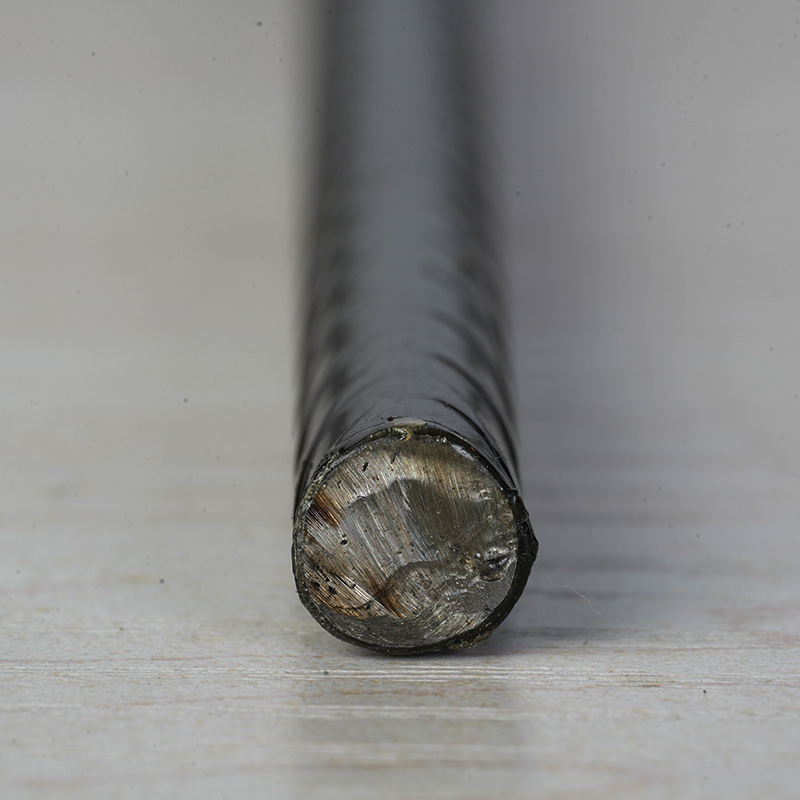
Engineers previously relied on plain Prestressed Concrete Wire for early precast applications. This material has severe mechanical limitations. It relies purely on chemical adhesion and basic surface friction to hold the tensioning force. Intense dynamic vibration easily shatters this brittle chemical adhesion. Once the chemical bond breaks, the smooth surface slips effortlessly through the concrete, releasing the prestress force.
To combat slippage, the industry developed traditional High Strength Indented Steel Wire. Manufacturers press standard two-sided or three-sided indentations directly into the steel shaft. This geometry provides a vastly improved mechanical bond. However, these pressed depressions create sharp geometric transitions. They sometimes act as severe stress concentrations at the root of the indent. Under cyclical loading, these concentrated stress points become primary initiation sites for dangerous fatigue cracks.
The continuous spiral rib geometry creates a definitive engineering advantage. Helical Rib Steel Wire does not use aggressively pressed depressions. Instead, wire mills roll raised, continuous ribs along the entire shaft. The structural mechanism mimics a screw thread. It creates a robust, uniform mechanical lock within the concrete matrix. This specific outcome delivers uniform stress distribution along the entire tendon. You achieve superior anchorage and excellent fatigue resistance simultaneously, entirely avoiding the severe stress concentration points found in indented profiles.
Wire Profile Type | Anchorage Mechanism | Fatigue Resistance | Slippage Risk Under Vibration |
|---|---|---|---|
Plain Smooth Wire | Chemical adhesion & friction | High (No surface stress points) | Very High |
Standard Indented Wire | Mechanical interlocking (depressions) | Moderate (Risk at indent roots) | Low |
Helical Rib Wire | Continuous screw-like locking | Very High (Uniform distribution) | Very Low |
Evaluating reinforcement wire requires strict adherence to metallurgical and geometric metrics. You cannot treat prestressing wire as a generic commodity. Dimensional tolerances and precise rib geometry matter immensely. We must carefully inspect uniform rib pitch, depth, and width during procurement. Inconsistent ribs compromise the anchoring effect, leading to uneven stress transfer lengths across a single sleeper.
Mechanical properties dictate the ultimate performance of the rail track. You should expect an Ultimate Tensile Strength (UTS) typically ranging from 1570 MPa to 1770 MPa for demanding sleeper applications. High tensile strength allows thinner wire diameters, accommodating denser concrete placement. Furthermore, standardizing on low-relaxation wire is absolutely non-negotiable for prestressed applications. Low-relaxation properties guarantee a stress loss of less than 2.5% at 1000 hours under constant strain. This ensures the structural prestress remains active and unyielding over decades of train traffic.
Fatigue resistance stands out as a critical evaluation pillar. Railway components endure endless vibration. Requirements demand passing rigorous cyclical load testing without wire fracture. Laboratories subject wire samples to millions of load cycles to simulate years of train pass-bys. If the wire snaps prematurely in testing, it will snap inside the concrete.
Finally, surface condition requires strict evaluation prior to casting. You must verify the complete absence of detrimental surface defects. Inspectors must look for mill scale, handling gouges, or active rust. While light, non-flaking oxidation can slightly improve concrete adhesion, active pitting corrosion acts as a destructive stress riser, ruining fatigue strength before the sleeper ever leaves the precast yard.
Regulatory lenses frame every major international infrastructure project. Track safety relies entirely on verifiable standards. We must navigate and enforce compliance with primary international standards like ISO 6934-2, EN 10138-2, and ASTM A881. National railway authorities often layer their own rigid specifications over these global baselines. Ignoring these standards invites catastrophic structural failure and massive legal liability.
Rigorous testing protocols confirm material safety and consistency. You should scrutinize every supplier’s mill test certificate (MTC) before accepting a wire delivery. The MTC provides the chemical DNA of the steel.
Chemical Composition Verification: Check Carbon, Manganese, and Silicon levels. These elements directly dictate the balance between extreme hardness and required ductility.
Tensile & Yield Testing: Review the load-extension graphs to ensure the wire meets the minimum breaking load without premature yielding.
Relaxation Testing: Demand independent laboratory data proving the 1000-hour relaxation limits remain below 2.5%.
Reverse Bend Testing: Ensure the wire can withstand required bending cycles without showing brittle fracture signs.
Supply chain traceability prevents systemic project failures. We cannot overstate the necessity of heat lot tracking. You must maintain clear documentation tracking the material from the raw wire rod melt all the way to the finished drawn and profiled product. If a sleeper fails on the track five years later, traceability allows investigators to isolate the exact batch and prevent network-wide derailments.
Always match the MTC heat numbers directly to the physical metal tags attached to the delivered coils.
Conduct independent, third-party lab testing on random coil samples every quarter to verify supplier MTC claims.
Implement a strict "first-in, first-out" inventory system to prevent older wire from oxidizing in storage.
Integrating Helical Rib Steel Wire for Railway Sleepers into an existing manufacturing workflow requires careful operational planning. Precast plant compatibility remains a major hurdle. You must assess whether existing tensioning jacks handle the specific spiral profile without slipping. Wedge anchorages, barrels, and grips must match the wire geometry perfectly. Using mismatched wedges on ribbed wire crushes the ribs, creating dangerous micro-fractures during the tensioning process. Additionally, automated cutting equipment needs calibration to shear helical profiles cleanly without fraying the ends.
Handling and storage introduce severe environmental risks. Maritime transit exposes wire coils to salt-laden air and intense moisture. You must actively mitigate the risk of pitting corrosion. We mandate volatile corrosion inhibitor (VCI) packaging for all sea freight. On-site, precast yards must store coils indoors or under heavy waterproof tarps. Allowing wire to sit in standing water drastically reduces its fatigue life, rendering it entirely useless for dynamic rail applications.
Supplier scalability heavily impacts multi-year project timelines. Evaluating a manufacturer's capacity goes beyond checking their theoretical maximum output. They must prove they can deliver consistent tonnage for large-scale railway projects without suffering batch-to-batch variance. Inconsistent diameter or fluctuating rib depth causes severe production bottlenecks. When wedge grips fail to hold undersized wire, the entire production line stops, wasting massive amounts of wet concrete.
Using worn-out wedge grips designed for plain wire on helical profiles, leading to dangerous slip-outs during stressing.
Storing coils directly on soil or gravel, allowing ground moisture to initiate rapid pitting corrosion.
Purchasing solely based on unit price without verifying the supplier's internal fatigue testing capabilities.
Helical rib steel wire for railway sleepers is never a simple commodity purchase. It remains a highly critical structural component that directly dictates the safety, durability, and maintenance lifecycle of the entire rail track. Understanding the severe dynamic loads imposed by modern high-speed and heavy freight networks highlights exactly why optimal stress transfer length is non-negotiable. The continuous mechanical interlock provided by spiral geometry outperforms plain and indented alternatives by eliminating dangerous stress concentration points.
Engineers must base their shortlisting logic on verified empirical data. Final procurement requires demanding verified fatigue test data, strict adherence to geometric tolerances, and highly transparent quality control documentation. You should never prioritize unit price alone over proven metallurgical consistency and traceable heat lots.
Your immediate next-step action involves rigorous supplier vetting. Request sample coils from prospective manufacturers. Demand full technical data sheets and matching third-party laboratory test reports. Once received, run a pilot evaluation in your specific precast sleeper molds to verify wedge grip compatibility and concrete transfer lengths before committing to bulk tonnage.
A: The primary difference lies in the geometry and manufacturing method. Standard indented wire features pressed depressions stamped into the steel, which can create localized stress concentrations. Helical wire features raised, continuous spiral ribs rolled onto the surface. This continuous geometry mimics a screw thread, offering a much more uniform stress distribution profile within the concrete and significantly reducing fatigue crack initiation points.
A: Yes, they integrate well into existing operations, but it requires careful equipment verification. You must verify that the existing pre-tensioning grips, specifically the wedges and barrels, are fully compatible with the specific spiral rib profile. Using mismatched grips can cause dangerous slippage or physically damage the wire during high-pressure stressing.
A: Primary international standards include ISO 6934-2 (Steel for the prestressing of concrete) and EN 10138-2. Additionally, regional rail networks rely on specific national railway authority specifications, such as AREMA standards in North America and UIC codes across Europe, which dictate exact fatigue and relaxation tolerances.
A: Low relaxation properties ensure that the critical prestressing force applied during sleeper manufacturing is maintained permanently. It minimizes the natural loss of tension over decades of dynamic train loading. By keeping the steel tightly stressed, it prevents the concrete from decompressing, which stops severe longitudinal cracking and extends track life.


