
Views: 0 Author: Site Editor Publish Time: 2026-09-11 Origin: Site


Can a mere 0.1mm variation in a wire indent ruin a massive concrete project? Absolutely. In the field, we have seen how the wrong depth causes dangerous wire slip or sudden snapping. It turns a minor manufacturing oversight into a catastrophic structural failure.
In this comprehensive engineering guide, we break down how to choose the correct indent depth. By aligning specific project load requirements with precision metallurgy, you can ensure your next precast concrete element stands the test of time and severe dynamic loading.
Indent Depth Balances Performance: The ideal depth creates maximum bond strength with the surrounding concrete without sacrificing the ultimate tensile strength of the steel.
Standardization Matters: Selecting the correct depth relies heavily on international engineering standards (such as ASTM A421, EN 10138, and BS 5896) rather than guesswork.
Shape Overlaps with Depth: The specific geometry of the indent—whether chevron, oval, or helical—works hand-in-hand with the depth to optimize pull-out resistance.
Manufacturing Quality is Crucial: Opting for thermally treated materials ensures the mechanical indenting process has not introduced fatal stress concentrations into the wire.
In modern structural engineering, the reinforcement matrix serves as the undisputed backbone of any concrete element. Concrete is exceptionally strong under compression but notoriously weak under tension. While plain steel rod has been utilized for decades, the rapid evolution of precast and prestressed concrete demanded a material that could offer superior mechanical interlocking.
This strict requirement led to the development of High-Strength Indented Steel Wire. This highly specialized component is manufactured through a rigorous process of cold drawing, followed immediately by mechanical pressing using profiled rollers. The primary application lies in critical infrastructure. Picture a hollow-core floor slab suspended thirty stories in the air, or a railway sleeper enduring the relentless, pounding weight of a heavy-haul freight train. In these high-stakes scenarios, structural integrity relies entirely on the continuous, uniform transfer of stress from the tensioned steel to the cured concrete.
Specifically, the engineering rationale behind adding these surface depressions is straightforward yet impactful. By introducing precisely engineered notches along the surface of the wire, manufacturers drastically increase the overall surface area. As the concrete cures and shrinks, the cement paste bites into these indents. This fundamentally changes the bond behavior, preventing the strand from slipping when subjected to immense tensile loads.
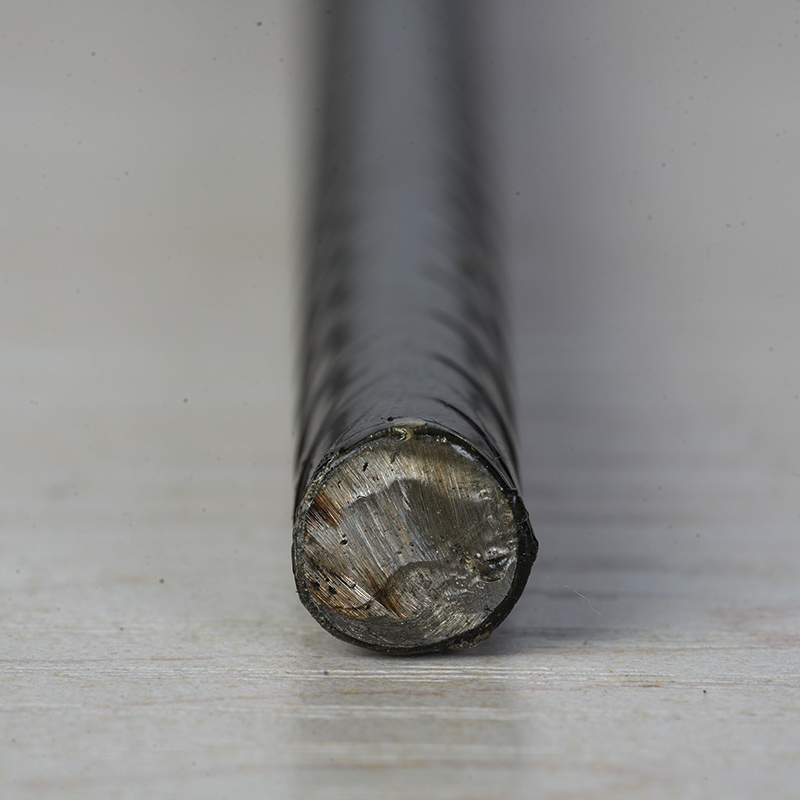
Determining the exact depth of an indent requires strict metallurgical and structural compromise. Engineers must pinpoint the exact threshold where concrete grip is maximized, yet the steel's internal integrity remains 100% intact.
According to guidelines published by the Precast/Prestressed Concrete Institute (PCI), concrete bonding relies heavily on "transfer length." This metric defines the physical distance along the wire required to transfer the fully effective prestressing force from the steel into the concrete.
An optimal indent depth significantly shortens this transfer length. When the indents are correctly proportioned, the concrete aggregates lock into the depressions, creating a wedge effect. This mechanical friction ensures that the stress is distributed evenly across the concrete element. This is particularly critical at the ends of precast components where shear stresses peak.
Does a deeper indent mean a stronger grip? Not necessarily. While a deeper indent might intuitively seem better, it introduces severe metallurgical hazards. In materials science, any sharp change in the cross-sectional area of a load-bearing metal acts as a "stress riser" or "notch effect."
When rollers press indents too deeply into the wire, they aggressively disrupt the continuous flow of the steel's grain structure. Under high tensile loads—often reaching up to 1860 MPa in high-strength applications—these deep notches become focal points for microscopic stress concentrations. Over time, particularly in structures subjected to cyclic loading, these anomalies propagate into fatigue cracks. Ultimately, exceeding the maximum allowable depth drastically lowers the fatigue life, risking sudden structural collapse.
In contrast, if the manufacturing process results in indents that are too shallow, the wire behaves like a plain, smooth rod. The primary risk here is anchorage failure. During the critical stress transfer phase on a casting bed, if the concrete cannot find sufficient mechanical purchase, the wire will slip inward.
This slippage destroys the prestressing effect, leaving the concrete highly vulnerable to tension. The immediate result is structural deflection, followed rapidly by severe concrete cracking. Therefore, maintaining the minimum standard depth is non-negotiable for bonded pre-tensioned applications.
Selecting the correct indent profile requires a methodical approach. It involves consulting international standards, analyzing the wire's geometry, and deeply understanding the specific concrete mix poured on the job site.
Global engineering bodies have established strict dimensional tolerances to ensure safety across borders. Standards such as ASTM A421, BS 5896, and EN 10138 explicitly dictate the minimum and maximum indent depths based on the nominal diameter of the material.
Below is a representative reference table demonstrating how typical standard tolerances are structured based on common nominal wire diameters (ranging from 4.0mm to 7.0mm):
Nominal Wire Diameter (mm) | Indent Type | Minimum Depth (mm) | Maximum Depth (mm) | Applicable Standard Reference |
|---|---|---|---|---|
4.00 mm | Chevron / V-Shape | 0.05 | 0.11 | EN 10138-2 |
5.00 mm | Chevron / V-Shape | 0.06 | 0.13 | EN 10138-2 |
6.00 mm | Chevron / V-Shape | 0.07 | 0.15 | EN 10138-2 |
7.00 mm | Chevron / V-Shape | 0.08 | 0.17 | ASTM A881 / BS 5896 |
Note: Always consult the specific, up-to-date engineering standard required by your local jurisdiction or project specifications before finalizing procurement.
A practical engineering guideline is that indent depth is proportionally linked to the nominal diameter of the wire. Thicker wires (such as 7.0mm or 9.0mm) inherently possess a larger cross-sectional area and a higher overall breaking load. Consequently, they can safely accommodate slightly deeper indents without suffering from critical stress concentrations. Typically, the optimal depth hovers around 1.5% to 2.5% of the wire's total diameter. Applying a 0.15mm indent to a 7.00mm wire is perfectly safe; however, forcing that same depth onto a 4.00mm wire would dangerously compromise its tensile strength.
Recent industry analyses reveal a significant shift in infrastructure procurement. As global high-speed rail and heavy-haul transit networks expand, engineering consortiums are moving away from baseline legacy standards. Instead, there is a surging demand for ultra-precise, customized indent profiles. Current market trends indicate that depths calibrated strictly between 1.5% and 2.0% of the wire diameter are becoming the new standard for dynamic load fatigue resistance. Manufacturers failing to achieve these micro-tolerances are rapidly losing ground in top-tier commercial bids, underscoring a broader industry pivot toward high-precision metallurgy.
While indent depth is a primary factor in determining bond strength, the geometric shape of the indentation plays a highly complementary role. Engineers must evaluate how different indentation profiles influence both the mechanical interlock and the metallurgical integrity of the steel itself.
The chevron, or V-shape indent, is one of the most traditional profiles in the precast concrete industry. This pattern features angular cuts pressed into the wire at regular intervals. The sharp angles provide an aggressive mechanical interlock, highly effective at preventing slippage.
However, the angular nature of this geometry means the depth must be strictly controlled. If a V-shape indent is pressed too deeply, the sharp root acts as a massive stress riser. Under cyclic loading, these roots become initiation points for microscopic fatigue cracks.
To mitigate the stress concentration risks associated with sharp angular cuts, modern manufacturing facilities have transitioned to oval or elliptical shapes. These rounded profiles provide a smoother transition between the surface of the wire and the base of the indent.
From an engineering perspective, this gradual curvature significantly reduces the notch effect. Because stress is distributed evenly across a rounded surface, manufacturers can safely achieve slightly deeper indentations without compromising the ultimate tensile strength (1570 MPa - 1860 MPa) or ductility of the wire.
While traditional indents rely on individual, spaced depressions to grip the concrete, helical rib profiles utilize continuous raised ridges that spiral along the length of the wire. Rather than concrete filling discrete voids, the helical ribs act like a screw thread embedded within the concrete matrix. For projects requiring continuous, uniform stress distribution, sourcing high-quality High-Strength Helical Rib Steel Wire is often the preferred engineering choice.
Selecting the correct surface profile is not a matter of preference; it is a strict engineering requirement dictated by the load transfer mechanism of the concrete structure.
Plain Prestressed Concrete (PC) Wire features a smooth, untextured surface. Because it lacks mechanical interlocking points, its bond strength relies purely on natural chemical adhesion and microscopic surface friction. Therefore, plain PC wire is predominantly used in post-tensioning applications. In these structures, the wire is housed within a protective duct and tensioned only after the concrete has fully cured. The structural load is transferred through mechanical end-anchorages.
In stark contrast, indented profiles are absolutely non-negotiable for pre-tensioned concrete applications. Imagine standing on a precast factory casting bed: the wires are stretched tight before the concrete is even poured. Once the concrete cures and reaches its required compressive strength, the tensioning jacks are released. The wire attempts to violently return to its original length, transferring its stored tensile force directly into the concrete.
Because there are no mechanical end-anchorages in most pre-tensioned precast products, this massive transfer of force relies entirely on the bond between the steel and the concrete. The precise depth of the indentations provides the necessary grip to ensure this stress transfer occurs efficiently.
Feature / Metric | Plain PC Wire | Indented Steel Wire |
|---|---|---|
Surface Profile | Smooth, untextured | Mechanically indented (Chevron, Oval) |
Primary Bond Mechanism | Chemical adhesion, slight friction | Aggressive mechanical interlock |
Primary Application | Post-tensioning (with end anchorages) | Pre-tensioning (direct concrete bond) |
Slip Resistance | Low | Extremely High |
Common End Products | Large-scale bridges, containment silos | Railway sleepers, hollow-core slabs, poles |
Theoretical specifications are only as good as the manufacturing processes used to execute them. Producing high-quality wire requires immense precision, as microscopic variations during the drawing phase can lead to macroscopic structural failures on the construction site.
The manufacturing process involves cold drawing high-carbon steel wire rods through progressively smaller dies to increase tensile strength. This is followed immediately by passing the wire through indenting rollers. Why does drawing speed matter? If a machine pulls the wire too fast to boost output, the indenting rollers vibrate. This microscopic bounce creates irregular depths—some sections may be too shallow to provide adequate grip, while others become excessively deep.
The mechanical process of cold drawing and indenting inherently introduces severe internal residual stresses into the steel matrix. The aggressive deformation hardens the steel but also makes it highly brittle. If left untreated, these internal stresses combined with the notch effect of the indents could cause the wire to snap unpredictably.
This is precisely why induction thermal treatment is mandatory. After the indenting process, the wire must be passed through a heating furnace (typically between 380°C and 400°C) before being slowly cooled under tension. Procurement managers must always ensure they are sourcing Stress-Relieved Steel Wire. This certification guarantees that the thermal treatment has effectively neutralized the manufacturing stresses, restoring essential ductility and improving the proportional limit.
Procuring the right materials requires looking beyond basic dimensional specifications. The reliability of the manufacturer and their quality assurance protocols directly impact the safety of your projects.
When evaluating suppliers, engineering teams should utilize a rigorous qualification checklist:
Evaluation Criteria | Requirement for High-Quality Sourcing |
|---|---|
Dimensional Tolerance Testing | Use of optical profile projectors for precise depth measurement down to 0.01mm. |
Thermal Treatment | Verified induction heating for stress relief and ductility restoration. |
Documentation | Comprehensive Mill Test Certificates (MTC) provided per batch, showing tensile strength (e.g., 1770 MPa / 1860 MPa). |
Standard Compliance | Explicit adherence to ASTM A421, EN 10138, BS 5896, or JIS specifications. |
Standard tolerances vary slightly depending on the international code (ASTM, EN, BS) and the nominal diameter of the wire. Generally, for common wire sizes (4.0mm to 7.0mm), the acceptable indent depth ranges from 0.05mm to 0.17mm. The depth is typically calibrated to represent roughly 1.5% to 2.5% of the wire's total diameter.
Transfer length is the distance required to transmit the full prestressing force from the steel to the concrete. An optimal indent depth significantly shortens this transfer length by maximizing the mechanical friction and wedge effect. If the indent is too shallow, the transfer length increases dangerously, which can lead to anchorage failure and end-zone cracking in the precast element.
Indent depth is measured using highly specialized laboratory equipment to ensure strict adherence to engineering tolerances. Quality control technicians use optical profile projectors, which magnify the wire's surface silhouette on a screen. Digital depth micrometers fitted with custom, fine-point anvils are also utilized for rapid, on-floor batch testing.
Cold-drawn wire has been mechanically pulled through dies to reduce its diameter, leaving it highly brittle and full of internal residual stresses. Stress-relieved wire has undergone an additional thermal treatment process (heating and controlled cooling under tension). This thermal process relaxes the internal stresses, restores essential ductility, and makes it safe for structural pre-tensioning.
Yes. Poorly manufactured indents that are excessively deep, sharp, or irregular can create micro-environments where moisture, chlorides, and contaminants become trapped. Furthermore, sharp internal angles can cause localized stress-corrosion cracking. Standard-compliant, smooth-profile indents mitigate these risks by preventing moisture pooling.
Choosing the proper indent depth is a task that demands extreme precision. It is a delicate balance between engineering aggressive concrete grip and maintaining the steel's ultimate structural power. A fraction of a millimeter is often the difference between a resilient infrastructure project and a costly failure. Always verify your project engineering specifications carefully and rely exclusively on standard-compliant, thermally treated materials.
If you are navigating complex load requirements or need highly specific tolerances for your next precast project, explore the full range of premium reinforcement solutions at tjdejia.com. Contact our engineering team today to discuss your specific needs and request a custom material quote.


