
Views: 0 Author: Site Editor Publish Time: 2026-10-04 Origin: Site


Prestressed concrete construction faces a constant engineering dilemma. Site managers must balance the rapid installation of unbonded tendons against the superior structural safety of fully bonded systems. Traditional grouted tendons distribute loads beautifully across a slab. However, they introduce messy, time-consuming grouting procedures. These manual processes are notoriously susceptible to hidden air voids and subsequent corrosion. Unbonded tendons, on the other hand, offer incredible speed out on the deck. Yet, they rely entirely on mechanical end anchorages. A localized failure or sudden seismic event can compromise the entire span.
To bridge this exact gap, the Retard-Bonded Steel Strand emerges as a highly engineered hybrid solution. This advanced system transforms autonomously. During the initial tensioning phase, it acts exactly like an unbonded tendon. Weeks later, it cures into a permanently bonded state without any external intervention. By understanding the chemical mechanisms driving this time-delayed curing process, structural engineers can drastically improve the efficiency and longevity of modern post-tensioned infrastructure.
Time-Delayed Curing: These specialized systems utilize a formulated, slow-curing epoxy. Initially acting as a high-performance lubricant during stressing, it later cross-links into a solid structural adhesive.
Zero Grouting Required: By relying on internal chemical curing, site crews completely bypass the complex and weather-dependent post-tension grouting process.
Superior Structural Integrity: Once fully hardened, the strand behaves identically to a traditional bonded system. It delivers continuous, reliable load distribution across the concrete member.
Precision Tensioning: High-grade metallurgy ensures the applied tension remains perfectly stable while the retarding adhesive undergoes its gradual curing cycle.
To fully grasp the bonding mechanism, we must look beneath the outer jacket. We need to examine the physical architecture of the product. Rather than a single material, this is a highly engineered, three-layer composite system. Each layer is designed for specific mechanical behaviors at different stages of the construction schedule.
The foundation of the system is the central core. For optimal safety margins, engineering specifications demand a Certified Low-Relaxation Prestressing Steel Strand. Typically boasting a tensile strength of 1860 MPa and a relaxation rate of less than 2.5 percent at 1000 hours, this premium steel wire bundle provides massive tensile strength. It compresses the surrounding concrete while resisting yield under sustained loads.
Coating this robust core is a proprietary, slow-curing retarding adhesive. Unlike the standard non-drying grease used in basic unbonded tendons, this reactive polymer is chemically unique. It is formulated to remain viscous for a predetermined window before undergoing a permanent structural transformation.
Finally, the entire assembly is encased in a high-density polyethylene ribbed outer sheath. This tough plastic protects internal components from moisture and physical abrasion during rough site handling. More importantly, the external ribs are designed to interlock mechanically with the poured concrete once it cures.
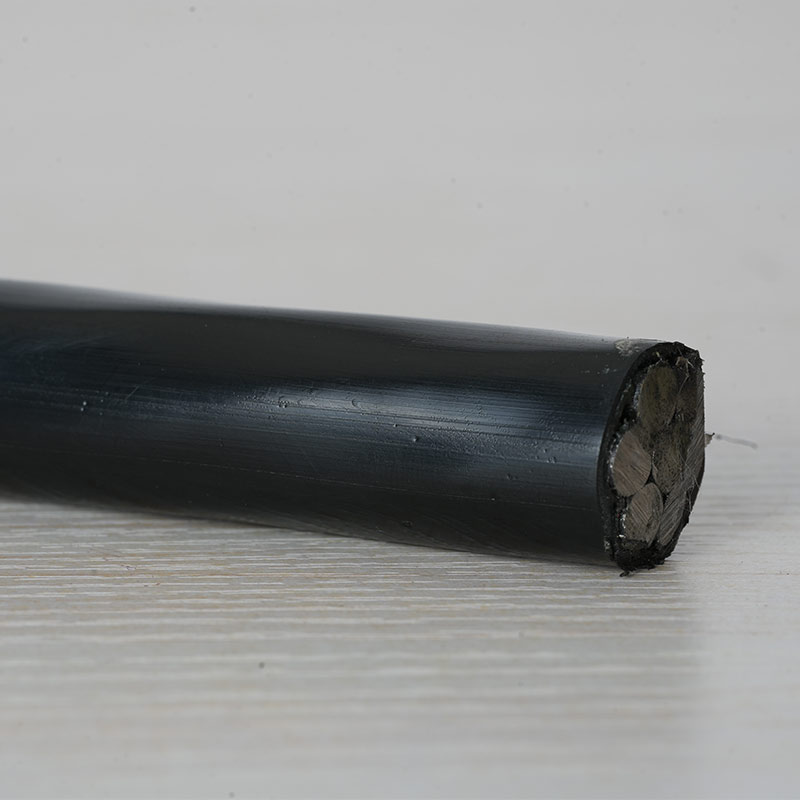
The defining characteristic of this technology is its ability to change physical states autonomously. This transition relies on a precise, time-dependent chemical reaction. The process unfolds in three distinct phases on the job site.
Out on the active deck, during concrete placement and the tensioning phase, the retarding adhesive remains in a gel-like state. At this exact moment, the resin functions purely as an advanced lubricant. When ironworkers engage the hydraulic jacks, applying immense force, the steel core stretches independently within the stationary plastic sheath. This lubrication ensures the applied force glides smoothly along the tendon profile. It minimizes friction losses and ensures even stress distribution from the live end to the dead end.
Once stressing is complete and the anchorages are permanently locked off, the chemical retardation period begins to expire. The proprietary epoxy undergoes a slow polymerization process. Depending on the specific chemical formulation and ambient site temperatures, this curing window lasts anywhere from a few weeks to several months. Throughout this period, the liquid resin gradually builds viscosity. It cross-links its molecules until it transforms into a rigid, impenetrable solid.
When the resin fully hardens, the transformation is complete. The solidified epoxy creates an unbreakable mechanical and chemical bond between the bare steel core and the internal walls of the ribbed sheath. Because the external ribs of that sheath are already deeply embedded into the cured concrete matrix, an uninterrupted load-transfer path is born. The system now behaves as a fully bonded tendon. It shares shear forces and distributes dynamic stresses evenly throughout the slab.
Looking at the broader trajectory of modern structural engineering, a distinct shift is occurring. Recent structural audits of aging infrastructure reveal a harsh reality. Post-tensioned bridges frequently suffer from severe, undetected tendon corrosion. This degradation is almost always traced back to incomplete grouting and hidden air voids.
Consequently, global regulatory bodies and transportation departments are aggressively pivoting away from manual grouting procedures. The industry trend is moving decisively toward autonomous, factory-controlled curing systems. Engineers now prioritize lifecycle longevity and zero-maintenance designs over traditional methods. Retard-bonded technology sits at the absolute forefront of this movement. It offers a proactive defense mechanism against chloride ingress while completely eliminating human error on the job site.
The success of the retard-bonded mechanism relies heavily on the metallurgical integrity of the internal steel. Utilizing premium materials is not merely a recommendation. It is a strict structural necessity to accommodate the delayed timeline of the adhesive.
Why does this matter? Because the retarding adhesive takes weeks to fully solidify. The steel core must hold its tension flawlessly during this vulnerable interim period. If the steel were to relax excessively before the resin hardened, the structural member would permanently lose critical prestressing force. Specifying top-tier, low-relaxation steel prevents this stress loss. It ensures the engineer's designed tension is preserved precisely until the mechanical bond locks in permanently.
For procurement specialists and construction managers, selecting the right post-tensioning system requires careful evaluation. You must weigh installation logistics against long-term structural performance.
Performance Metric | Traditional Grouted Tendons | Standard Unbonded Tendons | Retard-Bonded Hybrid Systems |
|---|---|---|---|
Installation Speed | Slow (requires ducting & grouting) | Extremely Fast | Extremely Fast |
Corrosion Vulnerability | High (prone to hidden air voids) | Moderate (grease degradation) | Very Low (solid epoxy barrier) |
Seismic Redundancy | Excellent | Poor (relies entirely on anchors) | Excellent |
Maintenance Overhead | High | Medium | Minimal |
While a standard Low-Relaxation Prestressing Strand is highly cost-effective and facilitates lightning-fast installation for thin slabs, it never bonds to the concrete. Its structural integrity relies entirely on the mechanical end anchorages. Building upon these realities, the retard-bonded advantage becomes crystal clear. It provides the rapid, duct-free installation of an unbonded strand while eventually delivering the ultimate safety and load-sharing capabilities of a grouted system.
Adopting this advanced hybrid methodology yields tangible returns on investment. It streamlines daily site operations while elevating the safety profile of the finished structure.
The most immediate logistical benefit is the total eradication of the grouting phase. Contractors no longer need to rent specialized grouting pumps or halt progress to wait for grout curing. Subsequent trades can access the deck much faster, significantly accelerating the critical path of the project timeline.
Furthermore, corrosion remains the primary enemy of post-tensioned structures. The combination of the factory-applied internal epoxy resin and the robust outer sheath creates a flawless double barrier. This ensures the steel core remains permanently isolated from moisture, road salts, and aggressive environmental agents.
While highly versatile, this technology provides exceptional value in specific structural applications where rapid construction speed and uncompromising safety must intersect.
In commercial real estate and large parking garages, construction cycle times directly dictate project profitability. Retard-bonded systems allow contractors to tension suspended slabs quickly and immediately jump to the next level. The final bonded state ensures the high load-bearing capacity required for heavy vehicular traffic.
Bridge girders face relentless exposure to dynamic traffic loads, de-icing salts, and brutal freeze-thaw cycles. The superior, void-free corrosion resistance of this system makes it ideal for extending the service life of critical highway infrastructure. Similarly, for liquefied natural gas storage tanks and nuclear containment structures, extreme safety margins are non-negotiable. The guaranteed void-free bonding meets the most stringent regulatory standards.
To achieve the designed structural performance, site teams must adhere to specific handling protocols. These protocols account for the unique chemical nature of the product.
The chemical curing speed of the retarding adhesive is highly sensitive to ambient temperatures. Hot summer weather will accelerate the cross-linking process, narrowing the available time frame for tensioning. Conversely, freezing temperatures will extend it. Site managers must coordinate closely with structural engineers to ensure stressing schedules are strictly met before the adhesive begins to solidify.
From an operational standpoint, the tensioning process is highly efficient. Standard hydraulic jacks and seating wedges are used. However, because the internal resin has a specific viscosity, technicians must carefully monitor elongation measurements. Precise calibration of the jacking equipment is essential to verify that the appropriate prestressing force is applied evenly.
The curing timeline varies significantly based on the specific chemical formulation of the resin and the ambient temperature at the construction site. Under standard conditions, the retardation period typically ranges from 30 to 90 days. Manufacturers can adjust this window during production to accommodate specific project schedules.
Yes, this system is highly adaptable. However, lower ambient temperatures will naturally slow down the chemical cross-linking process. For projects in freezing environments, special winter-grade retarding resins can be specified to ensure the adhesive cures reliably within the required timeframe.
Unlike traditional unbonded strands that rely entirely on end anchorages, a fully cured retard-bonded system distributes the load continuously along its entire length. The load is safely transferred to the surrounding concrete matrix. This redundancy prevents catastrophic structural collapse even if an anchorage is completely destroyed.
It is almost universally required by modern building codes. The low-relaxation properties ensure the steel core does not lose its applied tension during the crucial weeks before the adhesive fully cures. Maintaining this exact tension is vital for long-term deflection control.
Standard epoxy-coated strands feature a hard, cured layer of epoxy applied at the factory purely for corrosion resistance. They still require grouting if a bonded system is desired. Retard-bonded strands contain a liquid/gel resin that acts as a lubricant during installation and autonomously cures into a structural adhesive weeks later, eliminating the need for grouting.
Re-tensioning is only possible during the initial chemical retardation window while the resin is still in its viscous, unbonded state. Once the epoxy cross-links and hardens into a solid structural bond, the tendon becomes permanently locked into the concrete matrix and cannot be adjusted or re-tensioned.
For structural engineers, project managers, and procurement specialists looking to upgrade their post-tensioning designs, selecting the precise material specification is critical for project success. To explore industry-leading parameters, custom curing windows, and premium engineering solutions, visit TJ Dejia to secure the ideal Retard-Bonded Steel Strand for your next critical infrastructure project.


