
Views: 0 Author: Site Editor Publish Time: 2026-07-18 Origin: Site


Type 304 stainless steel wire stands as the global baseline for industrial, medical, and commercial wire applications. It offers an exceptional balance of corrosion resistance, structural formability, and reliable material efficiency. Specifying this versatile material requires careful attention to detail. Engineers often face severe mechanical failures or compliance issues when they specify the wrong temper, diameter, or format. Harsh operating environments easily expose these small specification errors. You cannot simply order a spool and hope it performs under intense physical pressure. This article provides procurement officers and engineers a comprehensive technical framework. You will learn how to evaluate if 304 exactly fits your structural demands, regulatory standards, and environmental conditions. By mastering these critical variables, you can prevent costly production halts, maintain strict compliance, and ensure long-term mechanical reliability.
Composition: Type 304 is an austenitic alloy (commonly known as 18/8) featuring 18% chromium and 8% nickel, providing a stable baseline against oxidation.
Versatility: Available across multiple form factors, from micro-wire for precision instruments to 6x19 class heavy-duty wire rope.
Primary Limitation: It is highly susceptible to localized pitting in high-chloride (saltwater/marine) environments, requiring an upgrade to Type 316 in such use cases.
Sourcing Priority: When evaluating suppliers, strict adherence to diameter tolerances, straightness limits, and ASTM standards is more critical than baseline material cost.
Type 304 derives its unique properties from a specific chemical structure known as an austenitic alloy. Industry professionals frequently call it 18/8 stainless steel. This designation refers directly to its core makeup: 18% chromium and 8% nickel. Chromium plays the most vital role in preventing rust. It reacts quickly to oxygen. This reaction creates an invisible, self-healing passive oxide layer across the surface. When you scratch the material, this chromium layer reforms instantly to block oxidation.
Nickel serves a distinctly different but equally crucial purpose. It stabilizes the austenitic crystalline structure at room temperature. This stabilization gives the material its signature ductility. You can bend, form, and weave the material easily. Without adequate nickel, the alloy would become too brittle for complex manufacturing processes.
Understanding the mechanical properties of 304 is essential for safe structural design. Standard physical properties define how it behaves under load. In its fully annealed (soft) state, the baseline tensile strength usually ranges from 75,000 to 90,000 psi. The yield strength hovers around 30,000 psi. It also features high elongation limits, often exceeding 40%. This high elongation allows extensive stretching before final fracture.
A critical characteristic of 304 is its response to heat treatment. You cannot harden this material by heating and quenching it. Heat treatment only softens it. To increase its hardness and tensile strength, manufacturers must use cold working. They achieve this by pulling the steel wire through progressively smaller dies at room temperature. This drawing process dramatically increases tensile strength while reducing overall ductility.
Engineers must remember one absolute rule: "stainless" does not mean "stain-proof." While 304 performs beautifully in fresh water and dry indoor settings, it has severe limitations. It remains highly vulnerable to chloride stress corrosion cracking (CSCC). Warm, chloride-rich environments will rapidly destroy it.
Common mistakes occur when using 304 in marine environments or indoor swimming pools. The microscopic chlorides attack the passive layer. This attack causes deep localized pitting and sudden mechanical failure. Furthermore, you must watch out for galvanic corrosion. If you pair 304 directly against incompatible reactive metals like aluminum or zinc in a damp environment, rapid degradation will occur. Always isolate dissimilar metals using dielectric barriers.
Manufacturers supply 304 in various formats to suit specific production lines. Solid round wire remains the most common form for precision manufacturing, spring winding, and medical device cores. When producing catheters or surgical instruments, dimensional consistency dictates success or failure.
Straightness tolerances demand intense scrutiny. Engineers measure straightness as "camber" over a specified length. Automated machining centers, especially Swiss-style CNC lathes, require near-perfect straightness. If the material carries a slight bow, it will whip aggressively inside the guide bushing. This whipping destroys tight machining tolerances, ruins cutting tools, and halts production entirely.
For dynamic lifting, rigging, and cargo control, manufacturers braid the material into wire rope. The 6x19 class represents a highly popular structural configuration. It consists of six distinct outer strands. Each outer strand contains nineteen individual wires. This specific geometry provides an optimal mix of abrasion resistance and bending flexibility.
You must strictly differentiate between Working Load Limit (WLL) and Breaking Strength. Breaking Strength represents the exact catastrophic failure point under ideal laboratory testing. WLL dictates the safe operational capacity for daily use. Industry standards usually set the WLL at 20% of the Breaking Strength (a 5:1 safety factor). Never use Breaking Strength as your operational guideline.
Industrial filtration, granular separation, and architectural reinforcement heavily utilize T-304 woven mesh. The weaving process interlocks individual strands into a stable grid. The specific gauge (thickness) directly impacts the mesh's open area and structural rigidity.
Thicker strands create a highly rigid screen capable of supporting heavy loads. However, they drastically reduce the open area, which limits fluid or airflow. Conversely, micro-fine strands maximize flow rates for precision liquid filtration but tear easily under high pressure. You must balance wire diameter against your specific flow requirements.
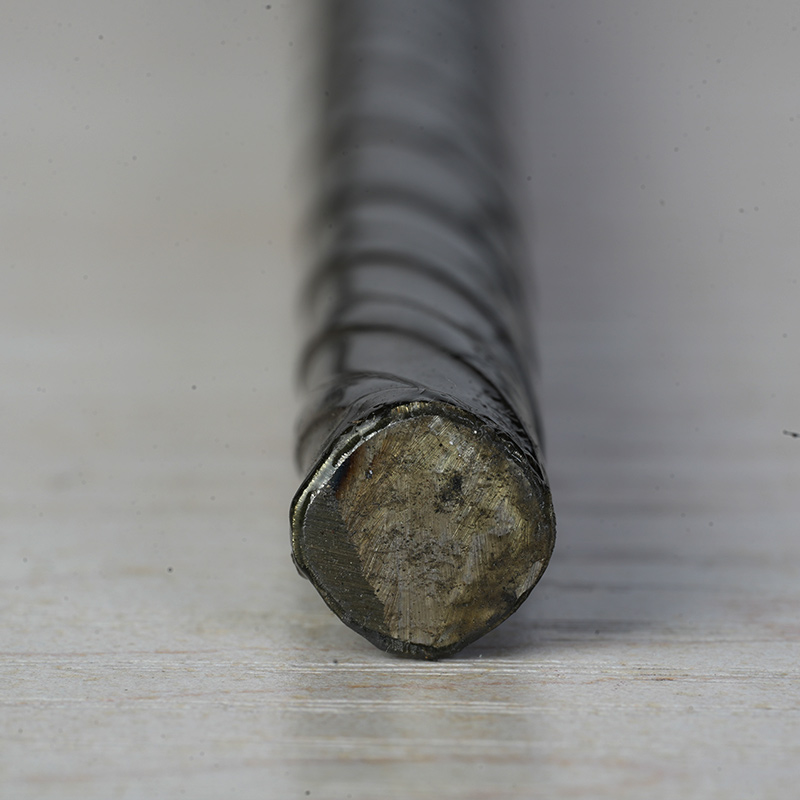
Specifying the nominal diameter is only the first step. You must also define the acceptable tolerance window. Micro-variations in diameter, measured in thousandths of an inch or tiny microns, severely impact downstream manufacturing.
Consider a medical device manufacturer threading steel wire through a narrow catheter tube. If the material exceeds the maximum diameter tolerance by just a few microns, it jams instantly. In automated textile looms weaving industrial mesh, inconsistent diameters cause irregular tension. Irregular tension creates visual defects and weakens the final mesh structure. Always specify your tolerance requirements clearly before requesting prototype samples.
Selecting the correct temper dictates how the material behaves during your forming process. Manufacturers generally offer options ranging from fully annealed to full spring temper.
Annealed: This state is soft, highly ductile, and perfectly suited for severe bending or deep drawing operations. It exhibits minimal spring-back.
Quarter/Half Hard: These intermediate tempers offer a moderate balance. They provide moderate strength while retaining enough ductility for shallow forming.
Spring Temper: This highly cold-worked state provides massive tensile strength. It resists permanent deformation under load. It proves ideal for load-bearing springs, retaining rings, and memory-retention medical guides.
A common mistake involves ordering spring temper for tight-radius bending. The high hardness will cause the material to fracture or snap rather than bend cleanly.
The surface finish impacts far more than aesthetic appeal. It heavily influences friction, cleanliness, and active use performance. Buyers typically choose between bright, matte, or custom-coated finishes.
A bright finish offers a smooth, highly reflective surface ideal for food processing or medical applications requiring easy sterilization. A matte finish results from specific annealing processes and offers a slightly rougher texture. Custom coatings, such as PTFE or specialized drawing soaps, reduce friction. Soap-coated finishes assist manufacturers by providing inherent lubrication during secondary stamping or coiling operations. You must wash these soap coatings away before final consumer use.
Table 1: Common Temper and Finish Configurations | |||
Temper State | Typical Tensile Strength | Best Suited Application | Common Finish |
|---|---|---|---|
Fully Annealed | 75,000 - 90,000 psi | Safety tying, severe bending | Matte / Bright |
Quarter Hard | 125,000 - 150,000 psi | Moderate forming, light shafts | Bright |
Spring Temper | 250,000+ psi | Compression springs, surgical guides | Soap Coated / Bright |
Knowing when to upgrade from 304 to 316 is a critical engineering decision. Both are austenitic alloys, but Type 316 contains 2% to 3% molybdenum. This molybdenum addition drastically increases resistance to localized pitting.
The decision logic remains strict. You must upgrade to 316 when your application involves marine environments, frequent exposure to de-icing road salts, or harsh chemical processing. The higher initial material expense of 316 prevents catastrophic field failures in chloride-rich settings. If your application stays indoors in a climate-controlled, dry facility, 304 remains the superior economical choice.
Sometimes, maximum tensile strength outweighs corrosion resistance. In these scenarios, you must evaluate high-carbon alternatives. High-carbon alloys offer significantly higher baseline strength and excellent fatigue life.
The decision logic dictates a pivot to high-carbon steel wire if you prioritize absolute tensile strength and major cost reduction. However, high-carbon materials rust rapidly when exposed to moisture. You must apply thick protective coatings, oil, or zinc plating to prevent immediate oxidation. If you cannot guarantee a dry environment, stick with Type 304 to avoid premature structural decay.
The "L" in 304L stands for Low Carbon. Standard 304 contains up to 0.08% carbon, while 304L limits carbon to just 0.03%. This microscopic difference plays a massive role during extreme heat exposure.
Specify 304L strictly if the material will undergo heavy, prolonged welding. Standard 304 suffers from carbide precipitation during welding. The heat causes carbon to bind with chromium at the grain boundaries. This binding depletes the protective chromium layer, causing a defect known as "weld decay." Type 304L minimizes this carbide precipitation, ensuring the weld seam remains fully resistant to localized corrosion.
Reputable manufacturing relies on rigorous standard adherence. Never accept undocumented materials for critical structural or medical applications. You must demand compliance with internationally recognized frameworks.
Critical standards to demand from suppliers include:
ASTM A313: The definitive standard specification for stainless spring wire. It dictates exact tensile strength ranges based on diameter.
ASTM A580: The general standard covering general-purpose stainless requirements, chemistry, and baseline mechanicals.
SAE Specifications: Often required for automotive and aerospace components to ensure fatigue reliability.
RoHS/REACH Compliance: Mandatory declarations for global electronics, proving the material contains no hazardous restricted substances like lead or cadmium.
Machining and forming 304 presents unique challenges compared to mild carbon alloys. The primary fabrication risk revolves around its work-hardening nature. As you cut or bend the material, the immediate friction and pressure cause it to harden rapidly.
You must warn your manufacturing floor about increased tooling wear. If a cutting tool rubs against the surface instead of slicing cleanly, the surface instantly hardens. Subsequent cuts become extremely difficult and frequently shatter standard high-speed steel tools. Always use rigid machine setups, sharp carbide-tipped tooling, and heavy coolant to minimize heat generation during fabrication.
Do not evaluate suppliers based on raw material availability alone. Consistent quality control separates reliable partners from risky vendors. The best practice for vetting involves demanding comprehensive documentation.
Always advise buyers to request Material Test Reports (MTRs) before committing to bulk spool orders. An MTR provides the exact chemical breakdown of the specific heat lot. It verifies the chromium and nickel percentages. It also lists the actual mechanical properties tested at the mill, confirming yield and tensile strengths. If a supplier hesitates or refuses to provide a certified MTR, you must immediately find a different vendor.
Type 304 stainless steel wire undoubtedly remains the optimal default choice for non-marine, non-highly-acidic environments. It provides reliable durability, excellent formability, and baseline cleanliness required for diverse industrial applications. Whether winding precision medical springs or weaving heavy filtration mesh, it performs predictably when specified correctly.
Your next steps require precise technical mapping. Finalize your exact required diameter, define the precise temper needed for your forming process, and establish the governing regulatory standards like ASTM A313. Once you lock in these variables, request certified quotes and prototype samples from a vetted distribution partner. Testing physical samples ensures the material behaves exactly as engineered before you commit to full-scale production runs.
A: It is generally non-magnetic in its fully annealed state due to its austenitic structure. However, it can become slightly magnetic after heavy cold working or intense drawing processes.
A: Yes, it welds easily using standard techniques. However, extended heat exposure causes carbide precipitation. You must use the 304L (Low Carbon) variant to prevent severe weld decay in critical joints.
A: It provides safe, continuous operating thresholds up to approximately 1,600°F (870°C). Above this temperature threshold, destructive surface scaling and rapid mechanical degradation occur.
A: Spring temper creates an inverse relationship between tensile strength and ductility. The heavy cold working drastically increases tensile strength but severely reduces flexibility, making sharp bends difficult without fracturing.


