
Views: 0 Author: Site Editor Publish Time: 2026-09-22 Origin: Site


Picture a bustling bridge construction site. Concrete is poured, deadlines loom, and the structural integrity of the entire span hinges on a silent chemical reaction happening deep within the plastic sheathing of post-tensioning tendons. Modern construction relies heavily on exact post-tensioning timing. If the internal resin cures too quickly, the tensioning process is ruined. Conversely, if the polymer hardens too slowly, subsequent construction phases grind to a halt, hemorrhaging project budgets.
Accurately calculating this specific curing window is non-negotiable for structural engineers. In this comprehensive guide, we will break down the precise methodologies used to test delay time accurately. You will learn how to navigate the process, moving from sterile laboratory environments to the gritty, unpredictable reality of on-site field testing.
Crucial Timing Window: The delay time of a retardant adhesive dictates the exact operational window structural engineers have to complete the hydraulic tensioning process before the material permanently hardens.
Dual Testing Methodology: Verifying this timeframe requires a combination of chemical laboratory analysis (viscosity and gel time) and physical mechanical evaluations (pull-out tests).
Environmental Sensitivity: Ambient temperature and relative humidity are the most significant external variables that alter the curing trajectory of the bonding resin.
Core Material Integrity: The chemical coating is only one part of the equation. Utilizing a certified low-relaxation core ensures that the underlying steel maintains structural integrity long after the bond sets.
To accurately test and measure delay time, it is first necessary to dissect the structural composition and chemical behavior of the materials involved in modern post-tensioning systems.
A Retard-Bonded Steel Strand is a highly specialized construction material used primarily in prestressed concrete structures. It consists of a high-strength steel core coated with a specially formulated, slow-curing epoxy or resin. This coated tendon is then encased within a durable, ribbed high-density polyethylene (HDPE) plastic sheath.
The true engineering value of this material lies in its dual-phase nature. During the initial concrete pouring and tensioning phase, the retarding adhesive remains in a highly viscous, liquid state. This allows the material to act as a lubricated, unbonded strand, minimizing friction loss while the heavy hydraulic jacks apply force. Once the predefined delay time elapses, the chemical resin undergoes a cross-linking polymerization process, hardening completely. At this final stage, it cures into a fully bonded tendon, locking the steel to the concrete structure and providing exceptional long-term structural safety and corrosion resistance.
In civil engineering, "delay time" refers to the specific duration required for the retarding adhesive to transition from a fluid state to a hardened state, achieving its maximum bond strength. This metric is not an arbitrary suggestion; it is a meticulously calculated engineering window.
Construction managers rely entirely on this tested timeframe to schedule sequential operations. Concrete pouring, curing periods, and the actual stressing of the strands must all occur strictly within this window. Should the delay time be miscalculated and the resin hardens prematurely, the strand cannot be tensioned to the required load. This failure severely compromises the load-bearing capacity of the structure. On the flip side, an excessively long delay halts downstream construction phases, leading to severe logistical bottlenecks.
Testing this window is complex because the chemical curing process is highly dynamic. The resin remains highly susceptible to both internal chemical formulations and external environmental conditions.
The curing of the epoxy resin within the sheath is an exothermic chemical reaction. Consequently, ambient temperature acts as the primary catalyst. According to standard chemical kinetics, higher heat accelerates the cross-linking of the polymer chains, thereby drastically shrinking the delay time. Imagine a spool of strand sitting on a sweltering asphalt staging ground under direct summer sun. A resin formulated for a 60-day delay at 20°C (68°F) might solidify in just 30 days if exposed to sustained temperatures of 35°C (95°F).
In contrast, cold temperatures naturally inhibit the chemical reaction, extending the delay time. Furthermore, extreme humidity can play a disruptive role. If the integrity of the sheath is nicked or compromised during rough site transportation, high moisture levels can interact with the uncured resin. This interaction potentially alters its viscosity and unpredictably shifts the curing timeline.
Manufacturers control the baseline delay time by adjusting the specific hardener-to-resin ratio during production. By tweaking this chemical formulation, suppliers can engineer strands with customized delay times to match the logistical requirements of different heavy-duty projects. These are typically standardized at 30, 60, or 90 days.
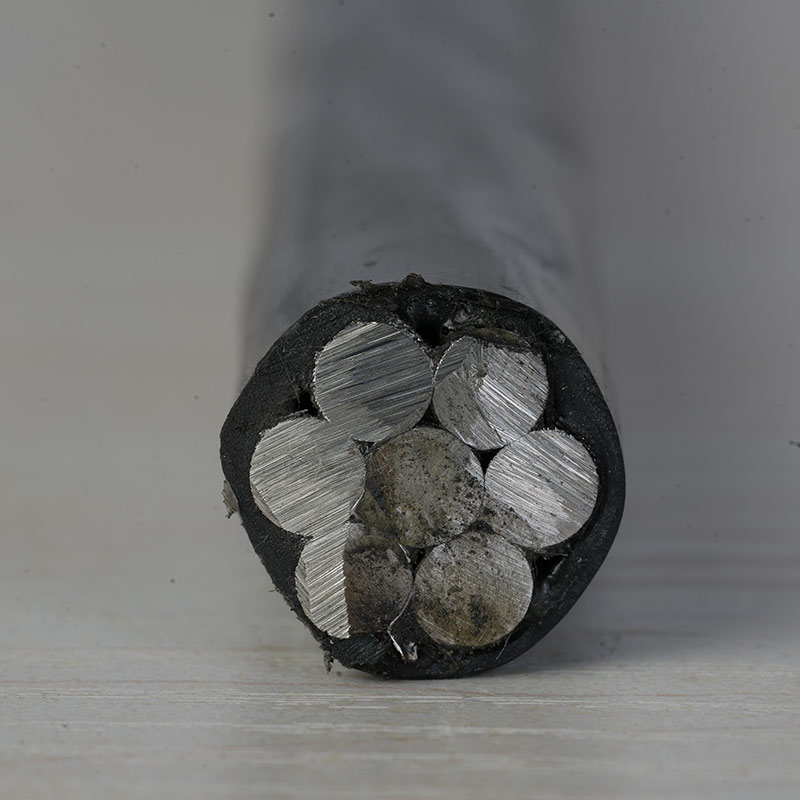
Before materials are approved for site installation, they must undergo rigorous laboratory testing. This establishes their baseline curing profiles under strictly controlled conditions.
The initial phase of laboratory testing focuses on the rheological properties of the adhesive. Specifically, technicians extract samples of the uncured resin directly from the manufactured strand. These samples are then placed into environmental chambers that maintain a strict, constant temperature.
Using a calibrated rotational viscometer, laboratory engineers measure the thickening rate of the adhesive over a set number of days. The viscometer records the torque resistance of the fluid. As the resin begins to cure, its viscosity increases exponentially. The "gel time" is officially recorded when the resin transitions from a viscous liquid to a semi-solid gel state. This critical measurement provides the theoretical boundary of the delay time, indicating the exact moment mechanical tensioning would become impossible.
While viscosity testing measures chemical changes, the pull-out test measures the physical mechanical reality of the bond. In this practical test, short segments of the strand are embedded into standardized concrete test blocks.
At predetermined intervals, engineers use calibrated hydraulic jacks to attempt to pull the strand out of the concrete block. In the early days, the strand slips out easily with minimal force, proving the resin is still acting as a lubricant. As the delay time approaches its end, the required pull-out force increases steadily. Ultimately, the delay time is officially concluded when the strand can no longer be pulled out of the concrete without the applied force exceeding the yield strength of the steel itself.
Laboratory conditions are static, but construction sites are chaotic and dynamic. As a result, lab results must always be verified through on-site field testing to account for real-world variables.
To ensure the safety of the final structure, engineers cast physical mock-up blocks directly on the construction site. These mock-ups utilize the exact same concrete mix and the exact same batch of strands intended for the main structure. By placing these blocks outdoors, the test strands are exposed to the exact diurnal temperature fluctuations, solar radiation, and morning dew that the actual structure will face.
Looking at recent industry developments and global civil engineering publications, the methodology for tracking delay time is rapidly shifting from purely reactive mechanical tests to proactive digital monitoring. With climate volatility making ambient temperature forecasts increasingly unreliable, forward-thinking contractors are now embedding IoT (Internet of Things) temperature and moisture sensors directly into the concrete mock-ups. These smart sensors transmit real-time micro-climate data to cloud platforms, allowing advanced algorithms to predict the exact resin curing trajectory dynamically. This growing trend not only minimizes the guesswork inherent in traditional manual pull-out tests but also acts as a critical fail-safe against disastrous premature tensioning.
Delay time testing also occurs dynamically during the actual tensioning phase. As the heavy hydraulic jacks apply force to the tendons, structural engineers closely monitor two vital metrics: friction loss and strand elongation.
If the retarding adhesive is still well within its delay time, friction will remain low, and the steel will elongate according to standard mathematical predictions. However, if the friction registers significantly higher than calculated, or if the strand fails to achieve the expected elongation, it is a primary empirical indicator that the resin is curing prematurely. This scenario requires an immediate operational halt to prevent the steel from rupturing.
A common area of confusion in materials testing is conflating the chemical coating with the steel itself. The performance of the delay time is entirely irrelevant if the underlying steel core is metallurgically substandard.
"Low-relaxation" is a metallurgical property, not a chemical one. When steel is held under constant heavy strain over decades, it naturally tends to lose a small percentage of its tension. During production, high-quality wire undergoes a specialized thermo-mechanical treatment known as stress-relieving. This process fundamentally alters the steel’s crystalline structure to minimize this tension loss.
For a retard-bonded system to function correctly over the lifespan of a bridge or high-rise, the core wire must be a Certified Low-Relaxation Prestressing Steel Strand. If the steel relaxes too much after the resin has cured and bonded to the concrete, the structure will lose its prestressed compressive force, inevitably leading to severe cracking and deflection.
Selecting the appropriate post-tensioning system requires a careful analysis of the project's structural demands. Standard unbonded tendons, such as a Premium Unbonded PC Steel Strand, are coated in permanent grease and encased in a plastic sheath. They never bond to the surrounding concrete, making them highly efficient for commercial building slabs and residential foundations where ultimate fail-safe redundancy is lower.
Retard-bonded systems, conversely, are reserved for heavy-duty infrastructure. Projects like LNG containment tanks or precast bridge segments demand the ultimate strength and fail-safe redundancy of a fully bonded system, as strictly required by stringent civil engineering codes.
Executing these tests accurately is fraught with technical challenges. Navigating them requires strict quality control protocols from the laboratory all the way to the job site.
One of the most dangerous phenomena observed during testing is inconsistent curing. This occurs when the retarding resin is applied unevenly during the manufacturing process, or if the chemical mixture was not perfectly homogenized. In these instances, parts of the strand may cure within 20 days, while other sections remain a viscous liquid for 60 days.
During a field pull-out test, this "patchy" bond yields false readings. The jack might register high resistance, suggesting the delay time is over. Yet, this resistance might only be coming from a localized clump of cured resin, while the rest of the strand remains dangerously unbonded. This highlights the absolute necessity of testing multiple samples from different sections of the spool.
The physical verification of delay time heavily relies on the precision of testing equipment. During pull-out tests, load cells and Linear Variable Differential Transformers (LVDTs)—which measure the microscopic displacement of the strand—must be calibrated to strict tolerances.
If a load cell is improperly calibrated, it may record a sufficient bond strength prematurely. Consequently, the engineering team might wrongly conclude that the delay time has ended. Regular, documented calibration of all testing apparatus to ISO standards is mandatory to eliminate these mechanical variables.
To mitigate the risks associated with premature curing or delayed bonding, civil engineering teams must implement a stringent framework of best practices throughout the project lifecycle.
All testing methodologies for prestressing materials must align with recognized international civil engineering codes. In the United States, this involves adhering to specific ASTM (American Society for Testing and Materials) standards regarding the tensile strength of the steel core and the chemical testing protocols for epoxies. European projects typically rely on equivalent EN or ISO standards. Adhering to these standardized frameworks ensures that the testing data is objective, reliable, and legally compliant.
The most rigorous testing protocols cannot compensate for fundamentally flawed materials. The absolute best practice for ensuring predictable, accurate delay times is to source the baseline materials from manufacturers with proven, automated extrusion and coating lines. High-quality manufacturing ensures that the chemical hardener-to-resin ratio is perfectly consistent across thousands of meters of strand. This consistency ensures that the delay time tested in the lab is exactly what will be experienced on the construction site.
Testing the delay time of post-tensioning materials is a rigorous process that bridges the gap between chemical theory and mechanical reality. By combining laboratory viscosity monitoring with on-site environmental mock-ups and physical pull-out tests, engineering teams can accurately pinpoint their operational window.
Mastering this timing prevents highly costly construction delays and guarantees the ultimate safety of the concrete structure. Always prioritize sourcing premium, third-party verified materials. Utilizing a certified low-relaxation strand with a precisely engineered retardant coating is the most effective way to ensure predictable curing, seamless installation, and a century of structural stability. For projects demanding exact specifications and reliable delay times, explore the engineered material solutions available at TJ Dejia to secure the structural integrity your project requires.
The delay time is chemically engineered based on the specific requirements of a construction project. Typically, manufacturers formulate the retarding resin to offer a delay window ranging from 30 to 90 days. For massive infrastructure projects where construction sequencing takes significantly longer, specialized formulations can extend the delay time up to 180 days. It is vital to specify this exact requirement during the procurement phase.
Yes, ambient weather conditions profoundly impact the curing chemistry. Because the curing of epoxy is an exothermic reaction, high ambient temperatures will accelerate the process, significantly shortening the delay time. Freezing temperatures can slow the reaction to a halt, prolonging the delay time. This is exactly why on-site mock-up testing under actual weather conditions is mandatory.
Attempting to tension a strand after the resin has fully cured is a critical engineering failure. Once the delay time has passed, the chemical resin forms a high-strength mechanical bond between the steel wire and the surrounding concrete. If hydraulic jacks apply force at this stage, the immense localized stress can cause the steel to yield, fracture, or severely damage the surrounding concrete matrix.
No, they refer to two entirely different aspects of the material. "Low-relaxation" describes the mechanical and metallurgical property of the steel wire itself, meaning it has been specially treated to retain its tension over decades. "Retard-bonded" refers to the external chemical coating and plastic sheathing system applied over the steel. A premium retard-bonded system utilizes a low-relaxation strand as its internal core.
Verifying a supplier's claims requires a multi-step quality assurance approach. First, request comprehensive, third-party laboratory testing certificates detailing viscosity and gel time tests. Ensure the manufacturer complies with ISO 9001 and relevant ASTM specifications. Finally, never rely solely on paperwork; conduct on-site environmental mock-up tests and physical pull-out tests to validate that the material performs exactly as claimed under your specific project conditions.


