
Views: 0 Author: Site Editor Publish Time: 2026-06-25 Origin: Site


While steel wire sounds like a basic commodity, it carries immense engineering responsibility. Specifying the wrong grade, gauge, or finish for an industrial application introduces significant structural, financial, and compliance risks. We often see projects stall because teams overlook minute metallurgical details. You must shift from a broad definition to strict commercial framing. The specific use of a wire is entirely dictated by its metallurgical composition—such as its carbon content—and its protective coatings. Without aligning these properties to your project demands, failure becomes a mathematical certainty. This guide bridges the gap between raw material properties and demanding industrial applications. It provides a reliable framework for engineers and procurement teams to evaluate options. You will learn how to shortlist the exact right material for your project based on tensile strength, corrosion resistance, and verifiable manufacturing standards.
Application matches composition: High-carbon steel wire is reserved for high-tension and structural loads, while low-carbon variants are optimized for malleability and binding.
Environment dictates coating: Galvanized and stainless steel wires are critical for corrosive environments, but require careful cost-to-lifespan ROI calculations.
Tolerance is non-negotiable: In automated manufacturing, slight gauge variations or poor spooling can cause costly machine downtime.
Verifiable compliance: Sourcing must always be backed by Material Test Reports (MTRs) aligning with standard ASTM or ISO specifications.
We classify use cases by structural demands rather than broad categories. You need to move beyond basic lists into harsh engineering realities. Different industries push this material to distinct physical limits. Understanding these boundaries helps you select the correct specification.
Construction & Infrastructure: Builders heavily use steel wire in prestressed concrete, suspension cables, and modern bridge construction. These projects require maximum tensile strength. They also demand minimal elasticity. You cannot afford material stretching under multi-ton dynamic loads.
Manufacturing & OEM Components: The material forms the foundation for industrial springs, heavy-duty fasteners, and robust rope manufacturing. Automated machining demands strict diameter tolerances. Even a microscopic variance jams production lines and ruins throughput.
Agriculture & Perimeter Security: High-tensile fencing and agricultural baling rely heavily on these materials. You must balance outdoor weather resistance against scale-driven efficiency. Extensive galvanization usually solves the outdoor exposure problem here.
Aerospace & Automotive: Engineers specify these strands for tire cord reinforcement, control cables, and specialized mechanical linkages. These applications require exceptional fatigue resistance. They also mandate adherence to extremely stringent global safety certifications.
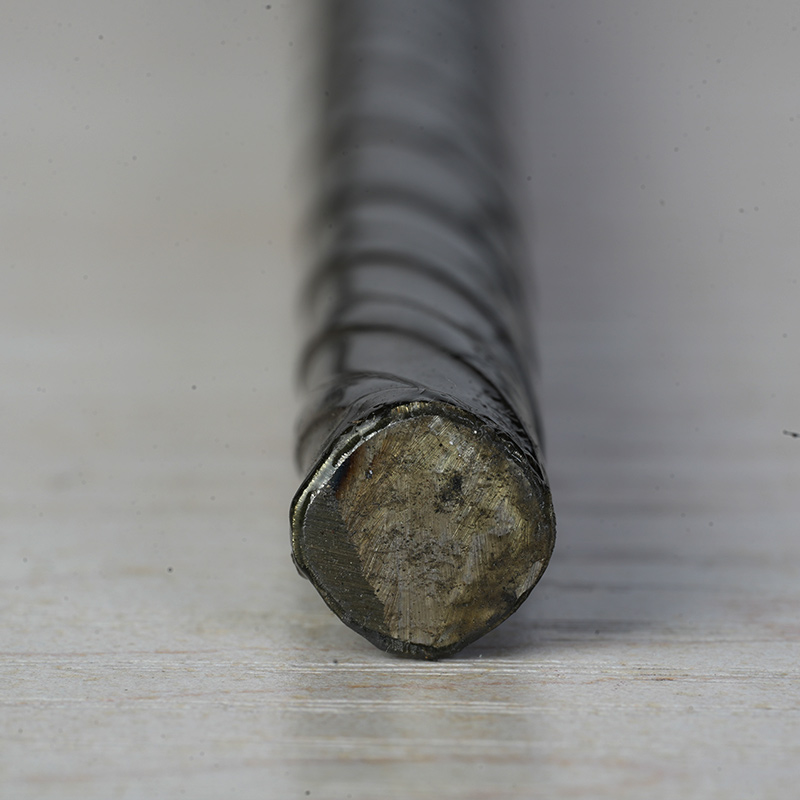
You must differentiate material solutions based on performance capabilities and physical limitations. The underlying metallurgy dictates how the product behaves under stress. We categorize these into three primary families.
Carbon content fundamentally changes the crystal lattice of the metal. You select the carbon tier based on the required balance between bending and lifting.
Low-carbon: This variant offers high ductility. It bends easily without snapping. We find it ideal for tying, binding, and shaping applications. Construction crews use it constantly to secure rebar grids before pouring concrete.
High-carbon: This tier provides immense tensile strength and hardness. You sacrifice flexibility for sheer load-bearing capacity. Manufacturers consider it essential for suspension cables, industrial springs, and heavy lifting operations.
This product features a protective zinc coating to prevent oxidation. The zinc acts as a sacrificial anode. It corrodes first so the underlying steel remains intact.
Decision lens: We recommend this for outdoor and marine environments. It offers excellent protection where strict budgets rule out highly alloyed alternatives. You will commonly see it in perimeter fencing, agricultural trellises, and outdoor suspension structures.
Foundries alloy this metal with chromium and nickel. The chromium forms a microscopic, self-healing oxide layer. This layer provides maximum inherent corrosion and temperature resistance.
Decision lens: You will find this mandatory for food processing, medical devices, and extreme maritime uses. It demands a high upfront investment. However, it yields the absolute lowest long-term maintenance risk in caustic environments.
Material Comparison Chart
Material Type | Ductility Level | Tensile Strength | Corrosion Resistance | Primary Engineering Focus |
|---|---|---|---|---|
Low-Carbon | High | Low to Moderate | Poor (Unless coated) | Malleability, binding, tying |
High-Carbon | Low | Extremely High | Poor (Unless coated) | Load-bearing, tension, springs |
Galvanized | Variable | Variable | Good (Sacrificial) | Outdoor exposure, agriculture |
Stainless | Moderate | High | Excellent (Inherent) | Chemical exposure, sterile fields |
Guesswork has no place in engineering procurement. You need a rigorous decision-making framework to evaluate solutions. We rely on four primary criteria to match materials to specific environments.
Tensile Strength vs. Ductility
You must calculate the exact load demands of the end-product. Failing to do so causes catastrophic failure through snapping or permanent deformation through stretching. High tensile strength resists breaking under tension. High ductility allows the metal to deform under tensile stress without fracturing. You rarely get both simultaneously. Engineers must pinpoint the exact yield point required for the application.
Environmental Exposure Profiling
We assess chemical, moisture, and temperature extremes before making a selection. You must determine whether a basic hot-dipped galvanized coating is sufficient. Sometimes, a specialized stainless alloy like 316L is strictly required. For instance, coastal marine applications expose metals to constant chloride attack. Standard galvanization will fail prematurely there, demanding a stainless upgrade.
Gauge Systems and Tolerances
You will frequently navigate AWG (American Wire Gauge) versus SWG (Standard Wire Gauge). They are not perfectly interchangeable. You must verify exact millimeter equivalents. Poor dimensional tolerance leads directly to jammed CNC machines. When an automated feeder encounters a swollen diameter, production halts entirely. Strict tolerance limits remain non-negotiable for high-speed manufacturing.
Industry Standardization
You must identify necessary compliance thresholds before ordering. Infrastructure projects often mandate standards like ASTM A641 for zinc-coated materials. You should also verify ISO 9001 facility requirements. Relying on uncertified materials introduces massive liability if a structural failure occurs.
Environmental Decision Chart
Exposure Environment | Primary Threat | Recommended Solution | Minimum Standard (Example) |
|---|---|---|---|
Indoor, Climate Controlled | Mild humidity | Bright Basic Carbon | ASTM A510 |
Outdoor, Rural | Rain, seasonal weather | Standard Galvanized | ASTM A641 (Class 1) |
Coastal / High Moisture | Salt spray, constant damp | Heavy Galvanized / 304 Stainless | ASTM A641 (Class 3) |
Chemical / Submerged | Acids, chlorides, localized pitting | 316L Stainless | ASTM A313 / A580 |
Experience reveals what goes wrong in the real world. Theoretical physics rarely accounts for poor handling or chemical oversight. You must understand how to mitigate these hidden failure points.
Hydrogen Embrittlement
This phenomenon poses a severe risk during the galvanizing or electroplating process. Hydrogen atoms can migrate into the metal's crystalline grain boundaries. This invasion causes sudden, brittle failure in high-strength materials under stress. You mitigate this by ensuring the manufacturer performs a proper "bake-out" process immediately after plating. This thermal treatment drives the trapped hydrogen out of the metal lattice.
Galvanic Corrosion
We frequently see accelerated rusting when teams improperly pair dissimilar metals. If you tie a galvanized product directly to bare copper or stainless steel in a damp environment, a galvanic cell forms. The less noble metal (the zinc coating) will corrode at an artificially rapid rate. You must use compatible materials or install dielectric separators in structural applications.
Packaging and Spooling Issues
Operators often underestimate how poorly wound materials retain "memory." If a supplier forces a thick strand onto a spool that is too small, it retains a tight curl. It will tangle immediately upon unspooling. This phenomenon causes catastrophic feeding issues in automated manufacturing lines. You should always specify the correct block size and demand traverse-wound spools for smooth payout.
Common Mistake: Ignoring the cast and helix of the spool. A strand should lay flat when cut. If it twists into a tight spiral, your machinery will struggle to feed it straight.
Best Practice: Always request a sample spool to run through your actual production equipment before committing to bulk tonnage.
Choosing a manufacturing partner requires strict operational scrutiny. You need a partner capable of delivering consistent metallurgical properties batch after batch. We recommend evaluating suppliers based on documentation, flexibility, and logistical stability.
Demand Material Test Reports (MTRs)
Never accept shipments without verifiable documentation of chemical and physical properties. An MTR provides the exact heat analysis of the steel billet used. It proves the material meets the requested tensile strength, yield strength, and chemical composition. If a supplier hesitates to provide an MTR, you must immediately disqualify them.
Assess Customization Capabilities
Standard catalog items rarely fit complex engineering needs perfectly. Can the supplier accommodate custom tensile requirements? Do they offer specific cut-to-length orders? Will they adjust spool sizes to fit your proprietary CNC feeders? A capable mill will adjust drawing speeds and thermal treatments to dial in the exact mechanical properties you request.
Evaluate Supply Chain Reliability
Raw material markets fluctuate wildly. You must assess standard lead times thoroughly. Compare domestic shipping realities against international shipping risks. Furthermore, evaluate the supplier's ability to hold inventory for bulk-release contracts. A partner who stocks your specific finished gauge locally prevents your production lines from starving during global logistics disruptions.
Defining what steel wire is used for requires matching precise metallurgical properties to harsh realities. You must continuously balance tensile strength against necessary ductility. Furthermore, you must match the protective coating directly to the environmental exposure profile. Overlooking gauge tolerances or spooling methods will ultimately paralyze your manufacturing lines.
Take action by reviewing your current bill of materials. Consult with an engineering or metallurgy specialist to audit your exact specifications. Request physical samples to test against your automated machinery. Finally, secure updated technical documentation and standard MTRs from your suppliers to guarantee you are building on a foundation of verified compliance.
A: Steel wire is the singular, solid, foundational element drawn through a die. Wire rope is a complex mechanical mechanism. Manufacturers twist multiple individual strands together around a central core to create wire rope. This stranding distributes heavy loads and dramatically increases overall flexibility and fatigue resistance compared to a single thick strand.
A: Yes, eventually. The zinc coating acts sacrificially, meaning it is designed to corrode before the underlying steel. The lifespan depends entirely on environmental severity and coating thickness. Once the zinc fully oxidizes and washes away, the exposed bare metal will begin to rust immediately.
A: You measure it using standard gauge tools like micrometers or calipers. The measurement relies on standardized systems like AWG or SWG. These systems use an inverse relationship. A higher gauge number denotes a significantly thinner diameter, while a lower gauge number represents a much thicker, heavier strand.
A: Yes, it can conduct electricity. However, it is highly inefficient compared to copper or aluminum. It presents high electrical resistance, causing significant energy loss and heat generation. We rarely use it for primary electrical transmission unless utilized as a high-strength reinforcing central core, such as in ACSR (Aluminum Conductor Steel Reinforced) cables.


